
Some scene illustrations in this article are AI-generated to aid understanding. The equipment photographs show actual JS SYSTEM machines.
Layouts with ample space beside the conveyor and those with limited side clearance require different considerations when choosing the PP strap feed direction. If your corrugated box factory is selecting an inline strapping machine, start by reviewing the line layout.
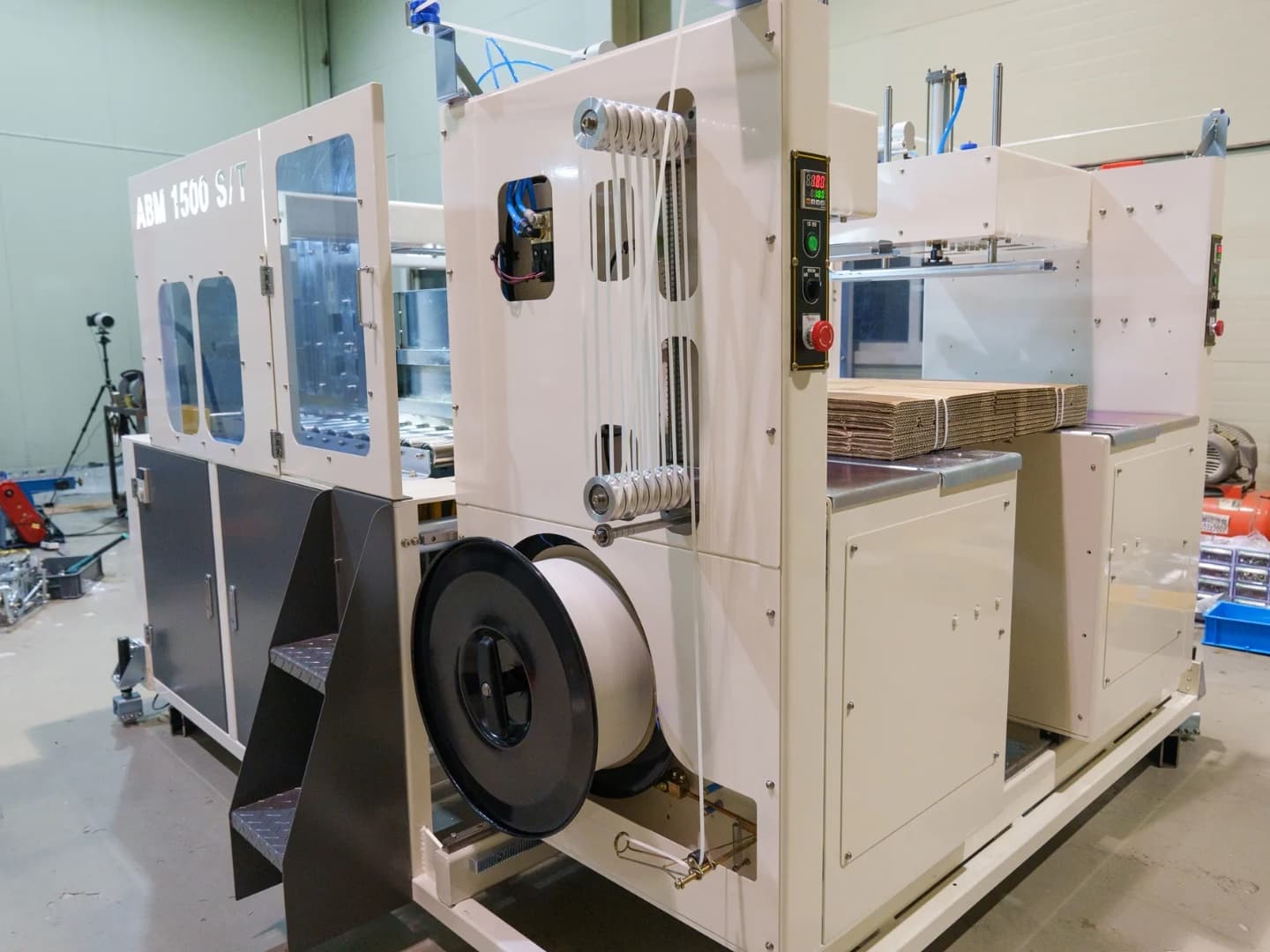
JS SYSTEM’s AMB 1500 S/T is an inline automatic PP strapping machine that straps bundles of finished corrugated boxes into shipping units. It secures the finished boxes themselves; it does not pack products into boxes.
This review covers the line to be connected, the feed method suited to the available side clearance, conveying speed, and installation requirements, in that order. It focuses on helping business owners, plant managers, and production staff share the rationale for model selection using the same layout plan.
Reviewing the Connection Point on the Existing Line
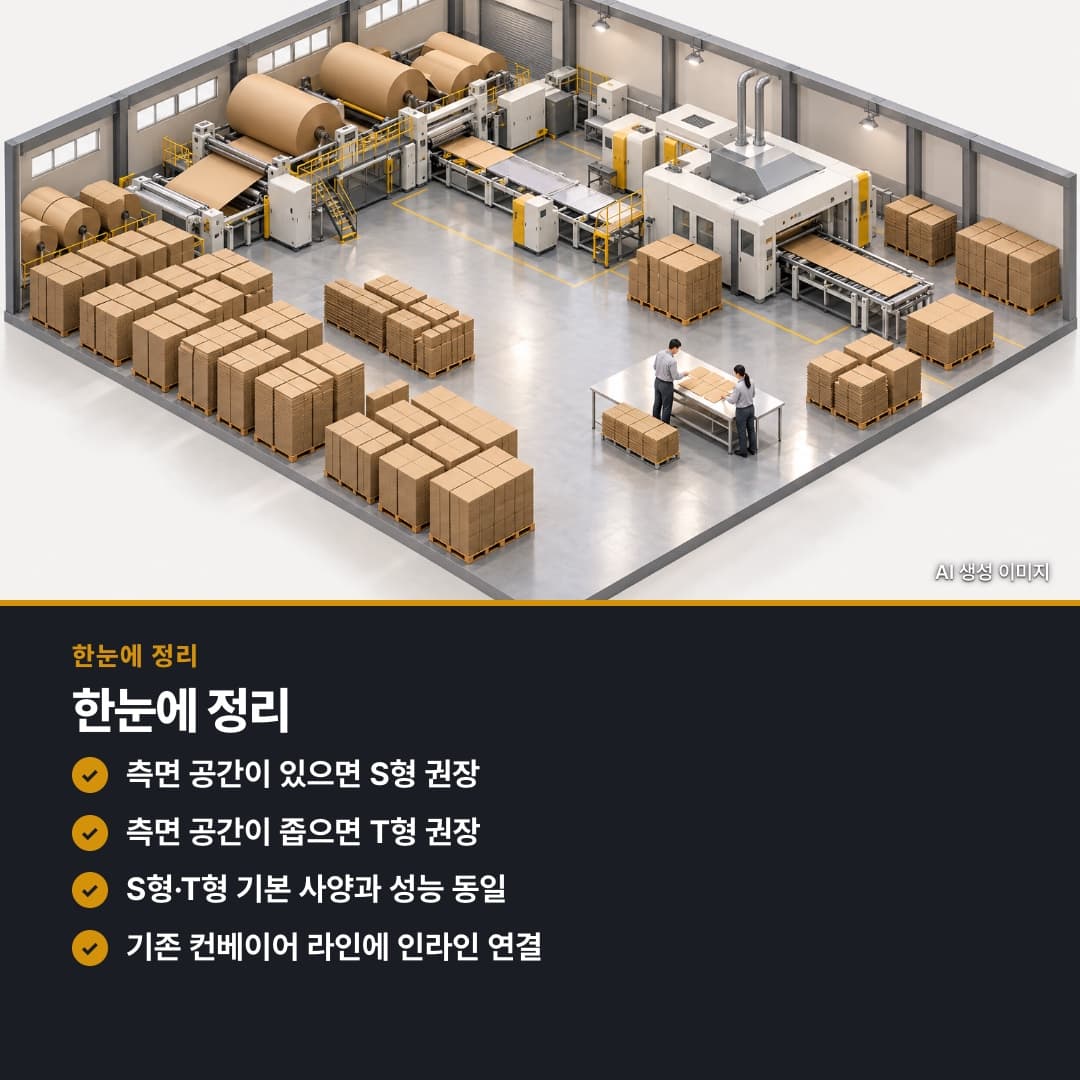
First, identify the section of the existing conveyor line where box bundles will be strapped. Because AMB 1500 S/T connects inline to an existing conveyor, installation discussions should start with the line that conveys the boxes.
The machine dimensions are 2,100×2,600×1,900mm. Adding these dimensions to the factory layout and reviewing them alongside the conveyor to be connected allows machine placement and line integration to be discussed within a single installation proposal.
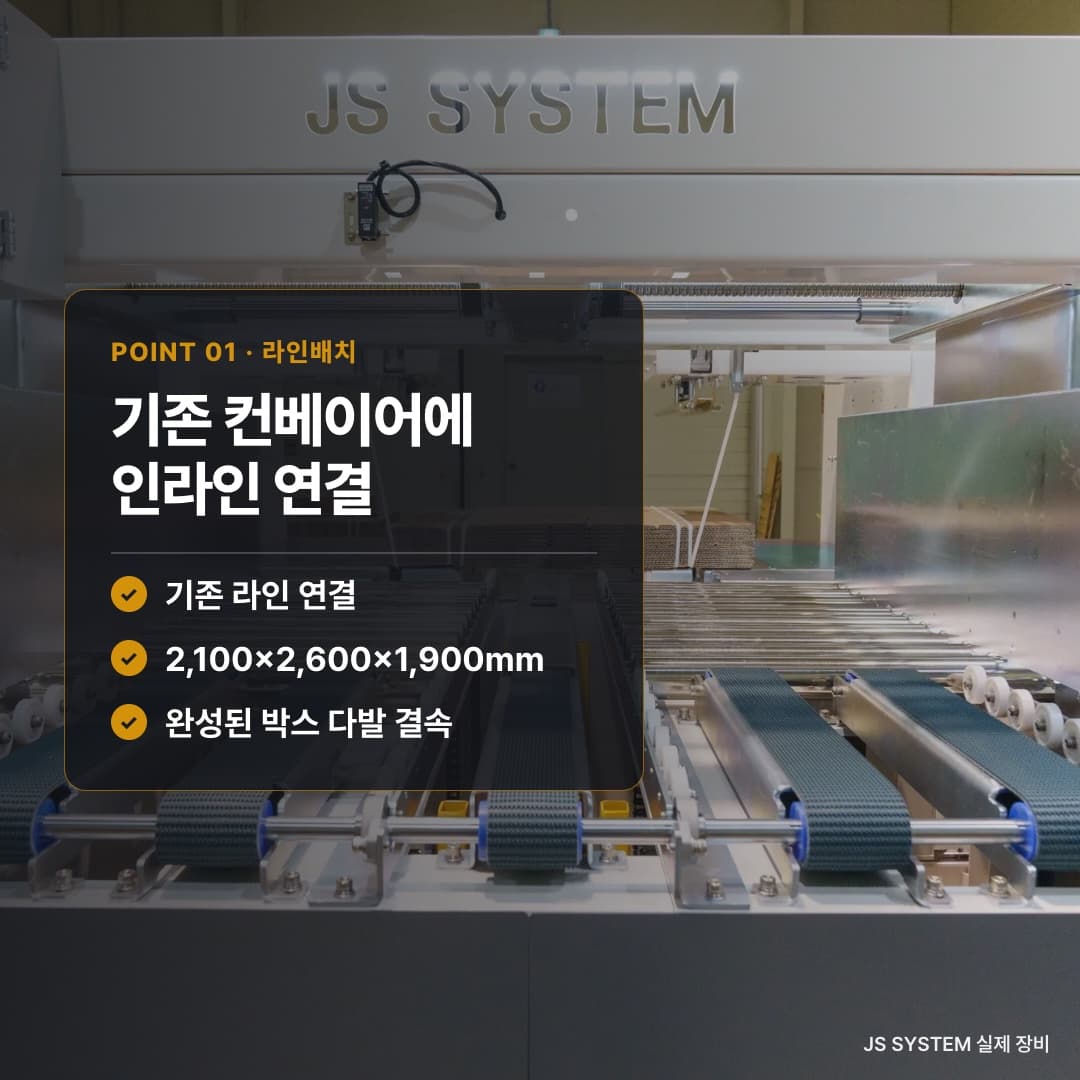
At this stage, review both the connection section and the surrounding space. Whether the layout provides ample or limited side clearance informs the next step: choosing between side feed and top feed.
Factory-specific installation space requirements are confirmed during the quotation consultation. Basing the discussion on the line configuration shown in the layout moves the review from a general model comparison to selecting a model for the actual factory.
Reviewing the Feed Method for the Available Side Clearance
The S model of AMB 1500 S/T uses a side-feed system that supplies PP straps from the side. It is recommended when space is available beside the line, making it the first option to consider for layouts with ample side clearance.
The T model uses a top-feed system that supplies PP straps from above. It is recommended when space beside the line is limited, so consultations for layouts with restricted side clearance should proceed on the basis of top feed.
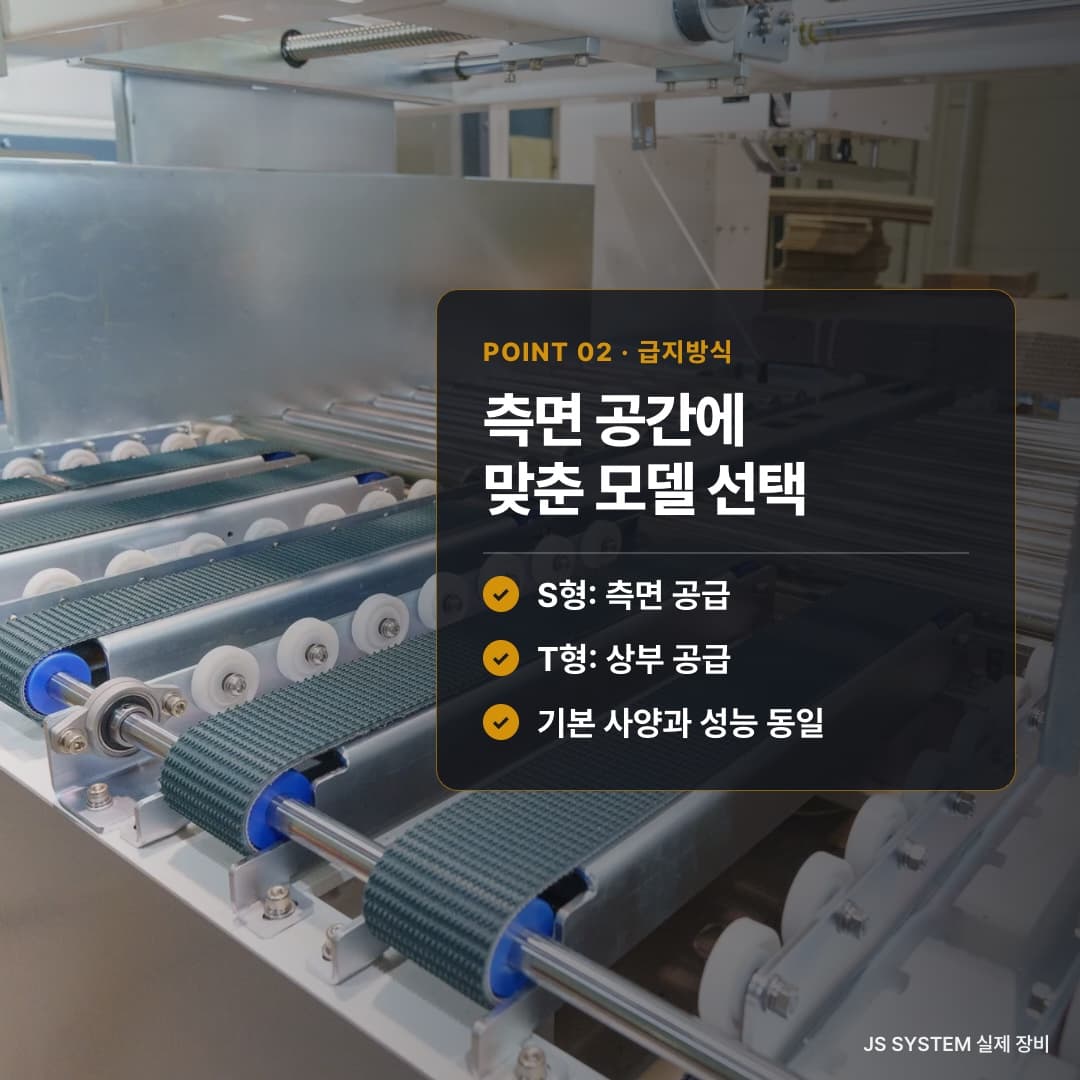
Both models have the same basic specifications and performance. Compare the S and T models based on how the PP strap feed direction fits the space beside the line, rather than on performance rankings. Share these comparison criteria so that a need for top feed is not mistaken for a performance difference.
If you are reviewing multiple layouts, we suggest assigning a model candidate to each based on its side clearance. Matching side feed to layouts with ample space and top feed to those with limited space makes the selection rationale easier to explain.
Reviewing Conveyor and Strapping Speed Adjustments
Once you have identified a suitable feed method, include the existing line speed in the installation requirements. The conveyor speed of AMB 1500 S/T can be adjusted independently to match the line speed, allowing consultations to be based on the speed of the line to be connected.
Box conveying and strapping speeds are also adjustable. For speed-related consultations, provide the current line throughput and discuss the conveying and strapping adjustments required for your factory conditions. Consultation materials can list current operating conditions separately from the desired conditions after installation.
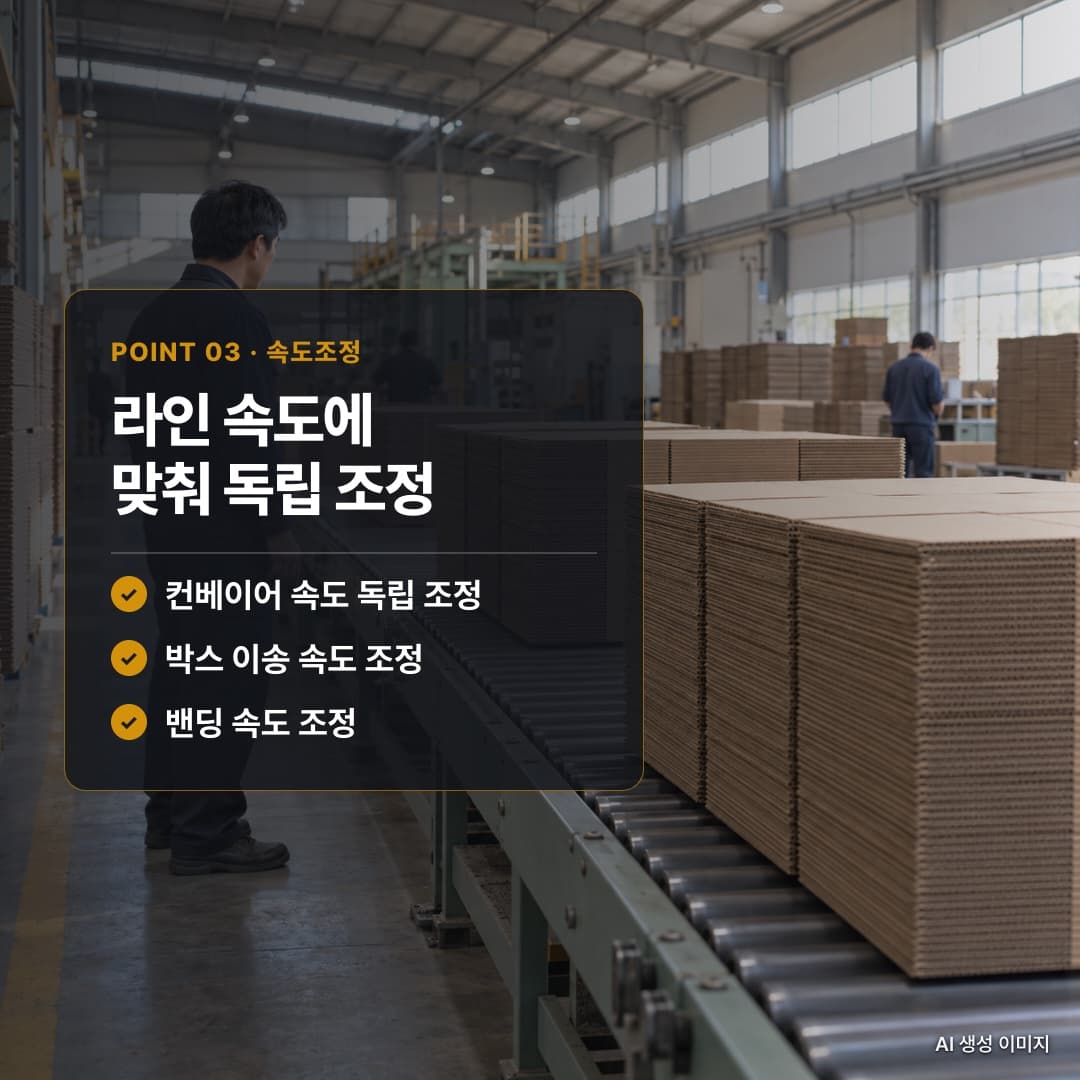
Separating model selection criteria from speed adjustment criteria makes the review clearer. Explain side clearance in relation to feed method selection, and line speed in relation to conveyor speed adjustment.
The website offers videos of the machine operating on actual production lines. After reviewing the connection point on the layout, watch how box bundles are conveyed and strapped to identify the specific operating sections to discuss during the consultation.
Reviewing Installation Requirements and Quotation Information
After reviewing layout and speed, consider machine weight and compressed air requirements. The machine weighs approximately 1,500kg and uses an air pressure of 4~6kg/cm. Use these specifications to confirm factory conditions during the quotation consultation.
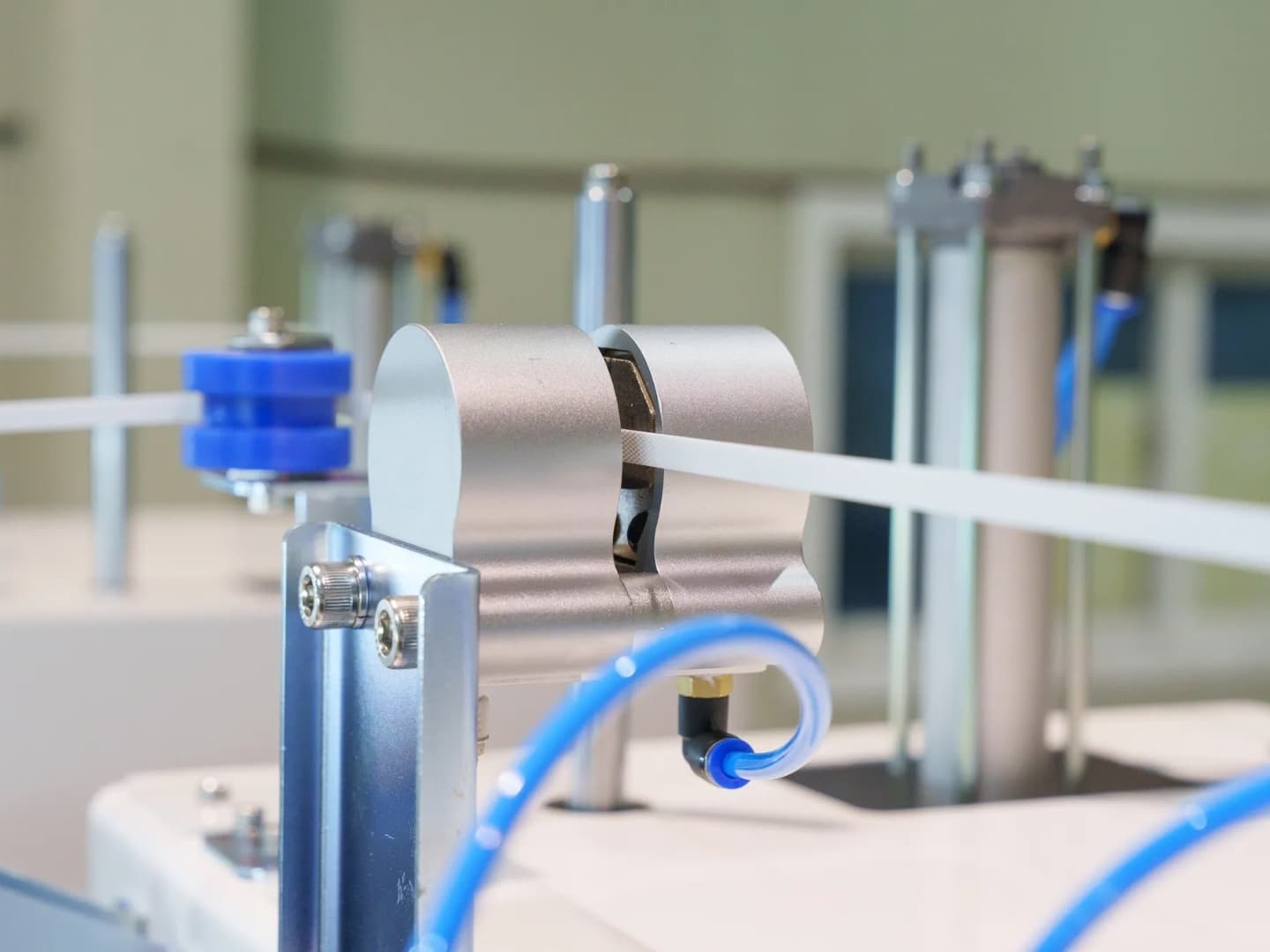
The pneumatic components are also Korean-made. JS SYSTEM provides a one-stop service covering design, manufacturing, and after-sales service directly in Korea, with the manufacturer’s engineers handling after-sales service themselves. Your installation review can therefore also cover who will provide support after installation.
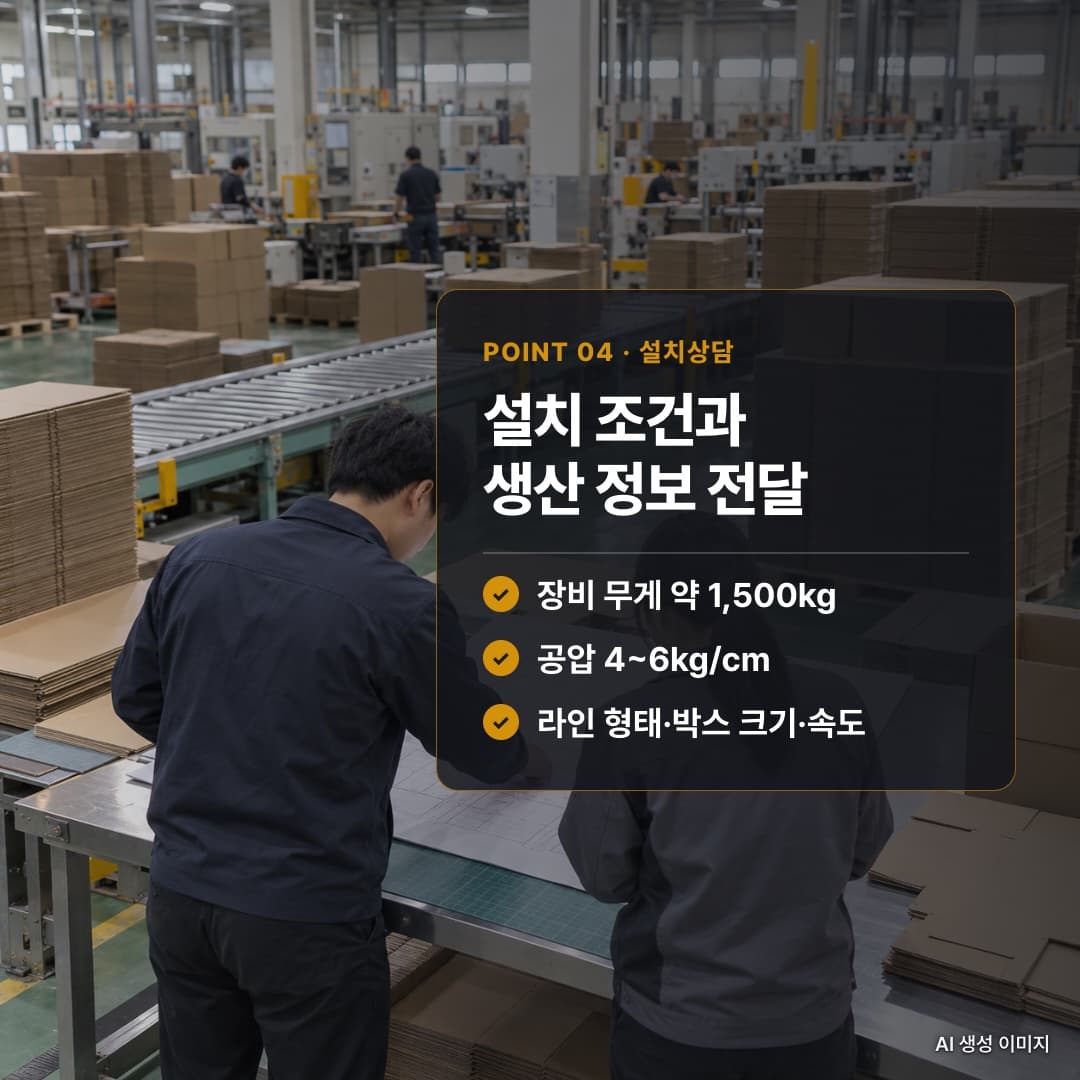
Include the line configuration, box dimensions, and throughput in your quotation inquiry. This information enables an accurate quotation and communicates the layout and production conditions you have reviewed to the manufacturer. Provide dimensions for the corrugated boxes that will be bundled for shipment.
When describing the line configuration, you can also indicate whether sufficient side clearance is available and which feed method you are considering. Including the model candidates and selection rationale in the consultation materials allows you to share your factory’s internal review with the manufacturer.
Frequently Asked Questions
Q. Does the T model offer higher performance than the S model?
The basic specifications and performance are the same. The S model uses side feed, while the T model uses top feed.
Q. Can the machine match the existing line speed?
The conveyor speed can be adjusted independently to match the line speed. Box conveying and strapping speeds are also adjustable.
Q. Where should I submit a quotation inquiry?
Submit your inquiry through the website’s contact form. You will receive a reply within 1~2 business days.
Once you have identified model candidates, combine the factory layout and production conditions into materials for the installation consultation. Share the space constraints reviewed internally and the required speed adjustments to discuss how AMB 1500 S/T can be integrated into your operation.
JS SYSTEM designs and manufactures equipment directly for the bundling processes of factories that produce and ship corrugated boxes. Guided by its promise, “The people who build it take responsibility to the end,” the manufacturer’s engineers also handle after-sales service.