
Why Changeover Time Matters in High-Mix, Low-Volume Production
In corrugated box plants, box specifications and bundle sizes often change from one order to the next. As high-mix, low-volume production grows, so does the number of daily changeovers, and the downtime in the strapping process adds up with every one.
That is why, when choosing strapping equipment, you should look at how quickly the machine can resume operation after a specification change, not just how fast it straps. Production flexibility ultimately comes down to changeover time.
The Changeover Process with Manual Strapping
With manual methods, operators must adjust the guide position, strap position, and tension by hand every time the specification changes. The cycle of adjusting, running a test strap, and fine-tuning tends to repeat, and results vary with operator skill.
When changeovers are infrequent, this is barely noticeable. But on lines handling a steady stream of small orders, these adjustment times put pressure on the entire shipping schedule.
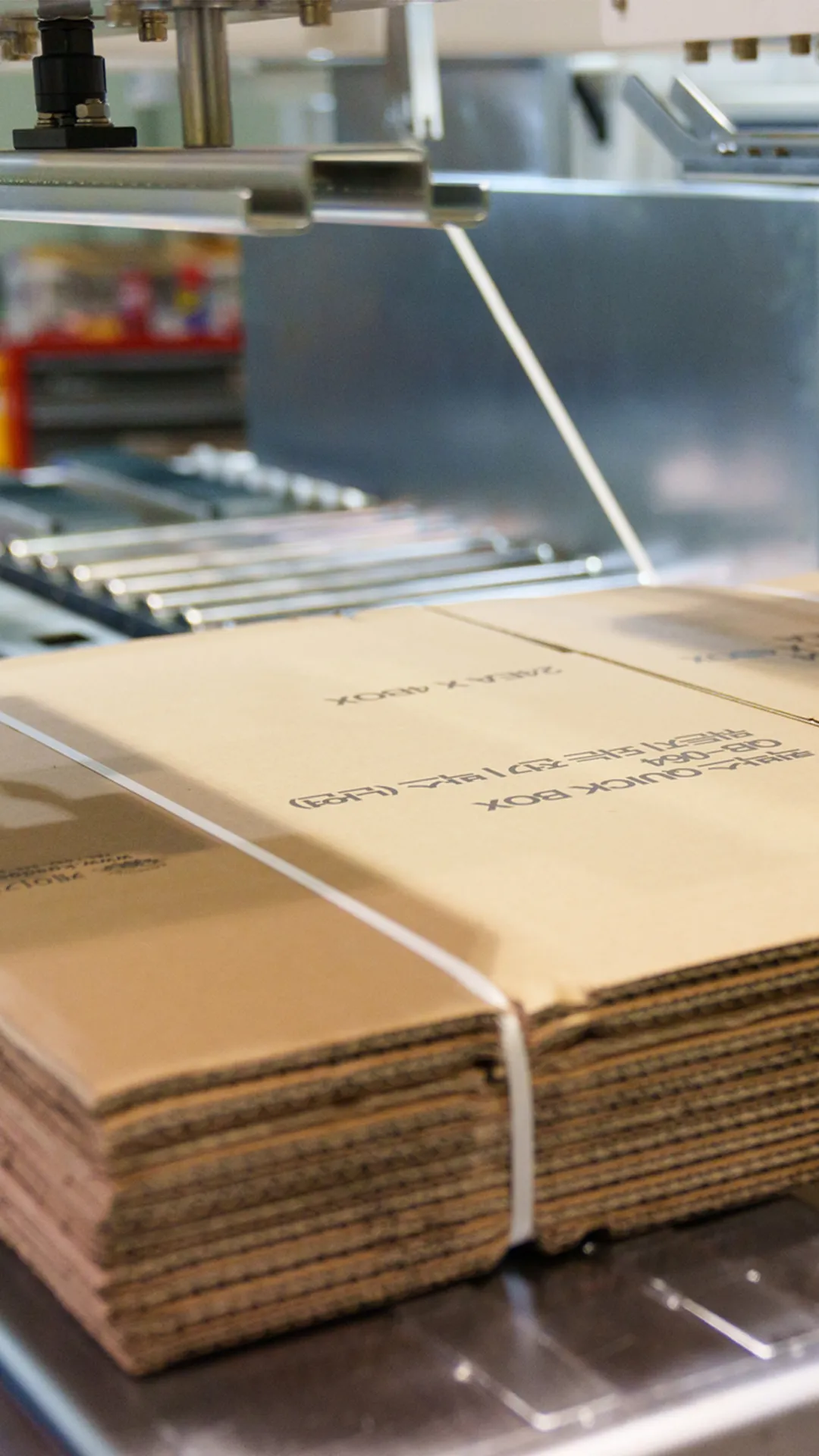
Auto-Setting Changeovers with an Inline Automatic PP Strapping Machine
The AMB 1500 S/T inline automatic PP strapping machine is built on a 9-axis full-servo drive and features Korea's first full-servo automatic auto-setting technology. When the specification changes, the operator simply selects it on the touch panel and the machine sets itself up automatically, saving 10–30 minutes compared with manual adjustment.
| 항목 | Manual Strapping | Automatic (Full-Servo Auto-Setting) |
|---|---|---|
| Changeover method | Manual adjustment by operator | Select on touch panel, automatic setup |
| Changeover time | Relatively long | 10–30 min saved vs. manual |
| Dependence on operator skill | High | Low |
| Tension consistency | Varies by operator | Consistent via servo tension control |
Changeover method
Manual Strapping
Manual adjustment by operator
Automatic (Full-Servo Auto-Setting)
Select on touch panel, automatic setup
Changeover time
Manual Strapping
Relatively long
Automatic (Full-Servo Auto-Setting)
10–30 min saved vs. manual
Dependence on operator skill
Manual Strapping
High
Automatic (Full-Servo Auto-Setting)
Low
Tension consistency
Manual Strapping
Varies by operator
Automatic (Full-Servo Auto-Setting)
Consistent via servo tension control
Production Speed That Holds Up After Changeover
Shorter changeovers only translate into real productivity if the line can return to full speed immediately afterward. The AMB 1500 straps at 28 cycles per minute and maintains consistent quality through servo tension control, so strapping results stay uniform even on lines with frequent specification changes.
Changeover time saved
Compared with manual setup
Full-servo drive
Foundation for auto-setting
Straps per minute
Full speed right after changeover
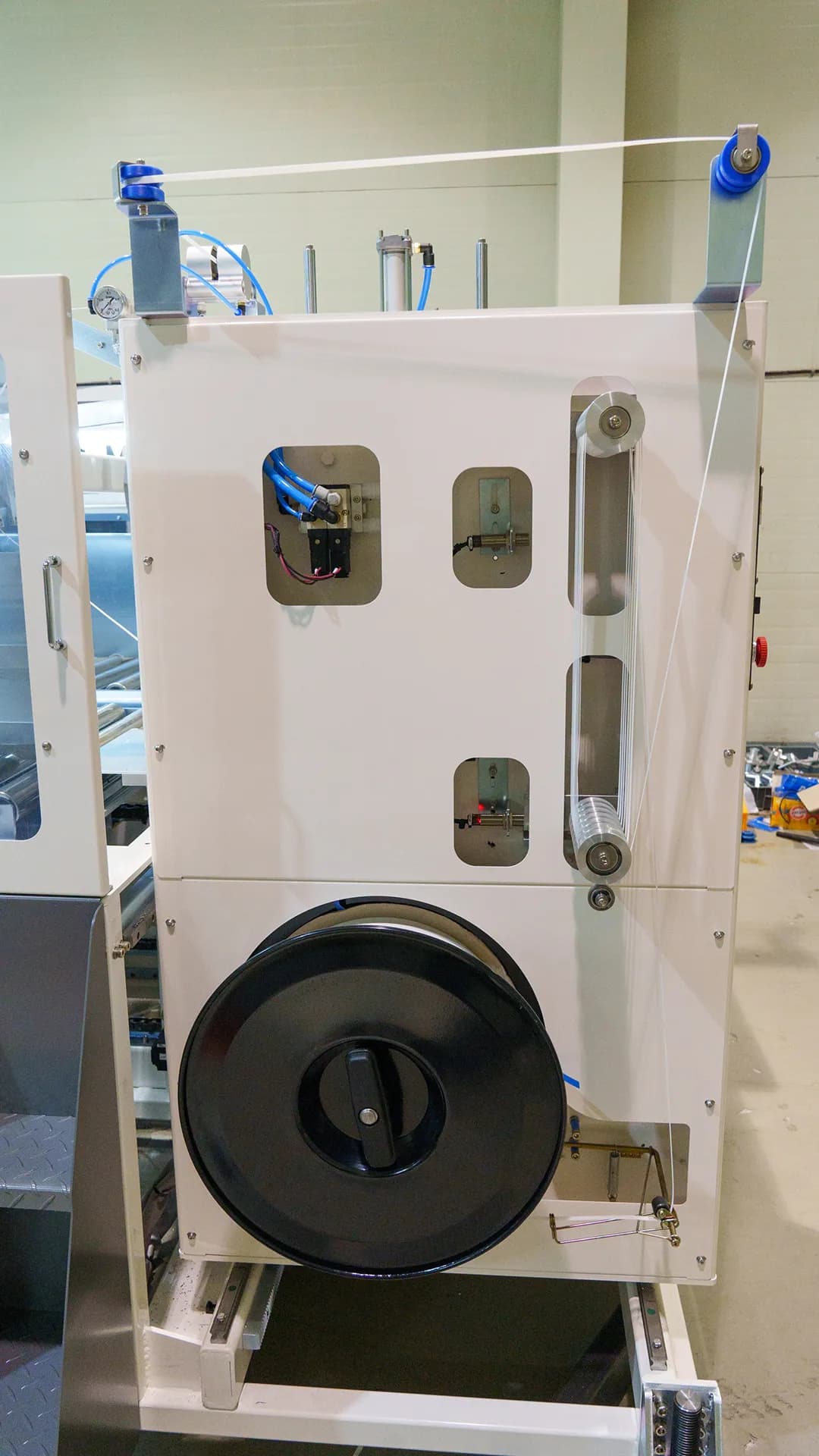
Choosing the Right Model for Your Line Layout
For inline operation connected to an existing line, the side-feed S model is the right fit; for a standalone installation, choose the top-feed T model. Both models use direct servo drive, eliminating the air leaks and cylinder wear common in pneumatic systems. The result is fewer minor breakdowns and long, stable operation.
The More Frequent the Changeovers, the Bigger the Auto-Setting Advantage
If your box plant handles frequent specification changes, we recommend starting your comparison with the changeover method. We stand behind what we build, from start to finish.