
Strapping: The First Process to Falter Amid Labor Shortages
Corrugated box plants consistently report difficulty finding workers. Among all processes, strapping finished box bundles with PP band into shipping units is especially hard to staff, as it involves highly repetitive work and heavy physical strain.
When strapping falls behind, boxes from upstream processes pile up and shipping schedules slip as well. As a result, box manufacturers are increasingly prioritizing automation of bundle strapping at the end of the line.
Why Strapping Automation Has Become an Industry Trend
Strapping automation is not simply about increasing speed. For a line to run reliably, bundles must be strapped to the same quality standard even when operators are absent or change. An inline automatic PP strapping machine connects to the existing production line and straps box bundles continuously as they arrive, so the strapping process no longer depends on staffing conditions.
| 항목 | Manual Strapping | Inline Automatic Strapping (Servo) |
|---|---|---|
| Labor dependency | High | Low |
| Strapping tension | Varies by operator | Uniform via servo tension control |
| Size changeover | Manual adjustment | Automatic setup via touch panel selection |
| Operating speed | Depends on operator skill | 28 cycles per minute |
Labor dependency
Manual Strapping
High
Inline Automatic Strapping (Servo)
Low
Strapping tension
Manual Strapping
Varies by operator
Inline Automatic Strapping (Servo)
Uniform via servo tension control
Size changeover
Manual Strapping
Manual adjustment
Inline Automatic Strapping (Servo)
Automatic setup via touch panel selection
Operating speed
Manual Strapping
Depends on operator skill
Inline Automatic Strapping (Servo)
28 cycles per minute
Auto-Setup That Reduces Reliance on Skilled Operators
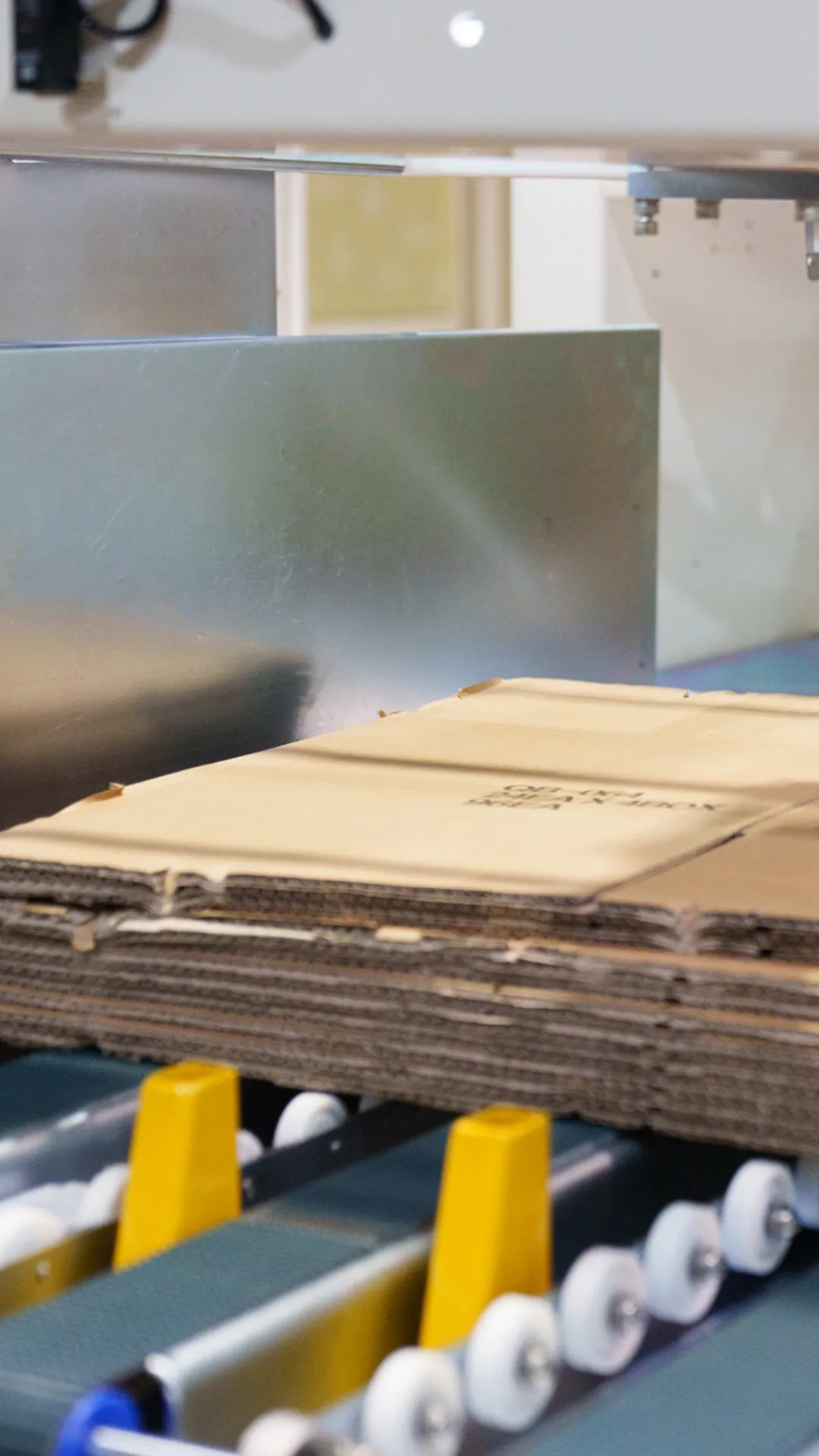
As labor shortages deepen, the absence of skilled operators becomes the real problem. If an experienced operator must adjust the equipment every time the box size changes, the line stops the moment that person is unavailable. The AMB 1500 S/T uses a 9-axis full-servo auto-setup system: simply select the size on the touch panel and the machine configures itself. That new staff can run it after only brief training is exactly why this matters on the shop floor.
Full-servo drive
Automatic auto-setup control
Setup time saved
Compared to manual adjustment
Straps per minute
Stable throughput
Equipment with Few Breakdowns Fills the Workforce Gap
The more short-staffed a plant is, the less capacity it has to deal with equipment breakdowns. Pneumatic machines are prone to cumulative air leaks and cylinder wear, whereas servo direct drive has far fewer wear and consumable parts, resulting in few minor breakdowns. Durability that keeps the machine running reliably over the long term directly eases the burden on the workforce.
The Manufacturer Stands Behind It All the Way
Designed and manufactured in-house in Korea, with after-sales service handled directly by the manufacturer's own engineers. Combined with a robust servo-driven structure, this supports stable long-term operation.

Checklist Before Adopting Strapping Automation
Any plant that produces and ships corrugated boxes, regardless of industry, should consider strapping automation. We recommend reviewing the following items first, based on your line configuration and site conditions.
Decide whether to connect inline to the existing line (S model, side feed) or install standalone (T model, top feed)
Identify frequently changing box sizes and the scope for using auto-setup
Assess the staffing and skill levels assigned to the strapping process
Verify durability for long-term operation and the manufacturer's direct after-sales service system