
Why Strapping Operations Require PPE
On the shipping lines of corrugated box plants, finished box bundles are strapped with PP strap continuously. Even when an automatic strapping machine does the strapping, operators work close to the equipment when they load strap, move bundles, and inspect the machine. Tensioned PP strap, sharp box edges, and moving conveyor sections can all cause injuries.
Wearing PPE isn't optional. It is a basic condition of the job. This article lists the essential PPE for strapping operations by hazard type.
Essential PPE by Hazard
The hazards change at each stage of the strapping process. Deciding in advance which PPE each stage needs helps make sure nothing is missed on the floor.
| 항목 | Key Hazards | Required PPE |
|---|---|---|
| Replacing and loading PP strap coils | Cuts from strap ends, strap snap-back | Cut-resistant gloves, safety glasses |
| Moving and stacking box bundles | Falling loads, pinching | Safety shoes, work gloves |
| Cutting applied straps | Snap-back when tension is released | Safety glasses, cut-resistant gloves |
| Equipment inspection and cleaning | Pinching in conveyor sections | Close-fitting workwear, safety shoes |
Replacing and loading PP strap coils
Key Hazards
Cuts from strap ends, strap snap-back
Required PPE
Cut-resistant gloves, safety glasses
Moving and stacking box bundles
Key Hazards
Falling loads, pinching
Required PPE
Safety shoes, work gloves
Cutting applied straps
Key Hazards
Snap-back when tension is released
Required PPE
Safety glasses, cut-resistant gloves
Equipment inspection and cleaning
Key Hazards
Pinching in conveyor sections
Required PPE
Close-fitting workwear, safety shoes
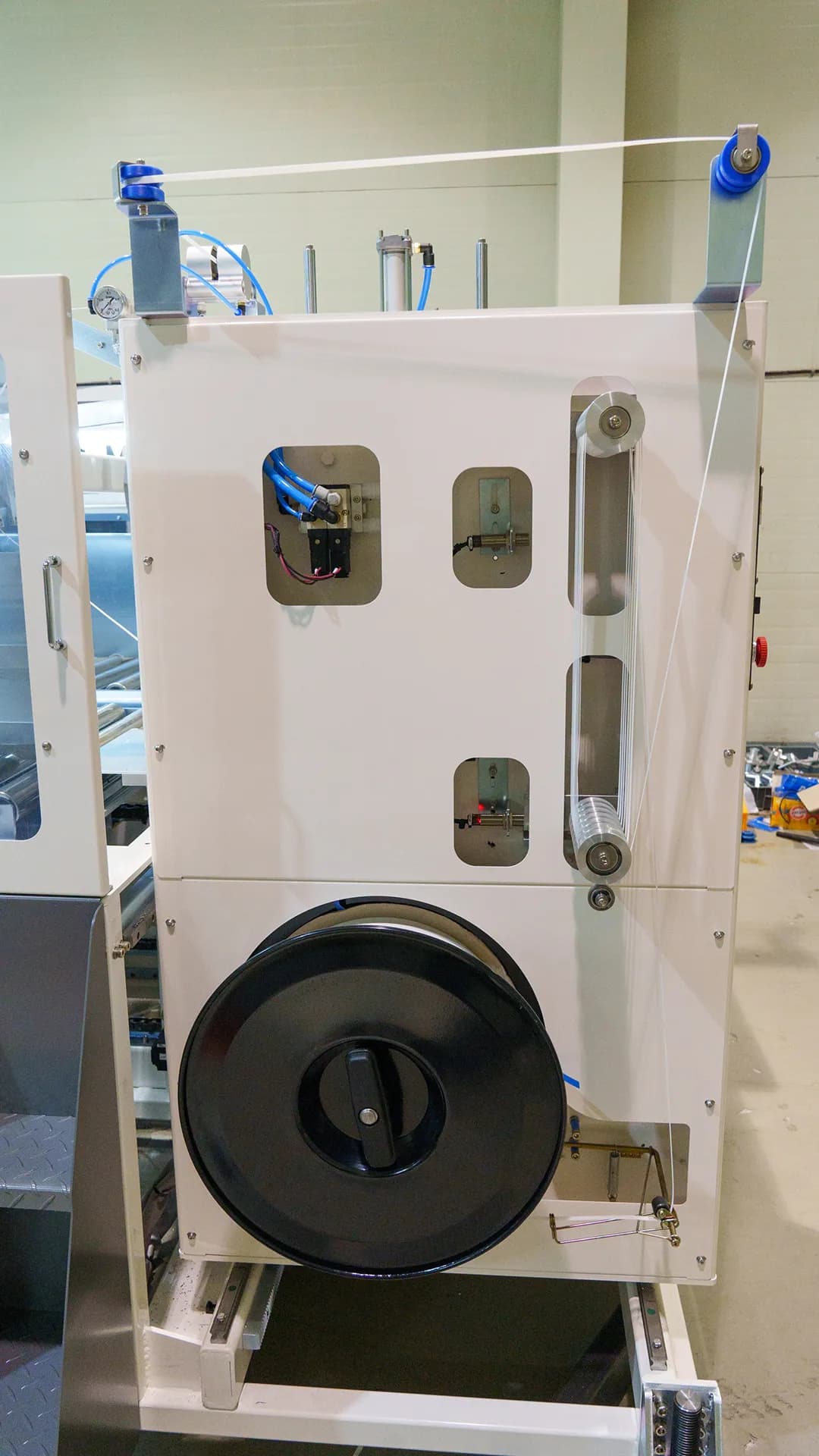
Safety Glasses and Gloves: Protecting Against Strap Snap-Back
PP strap that is cut under tension can snap back without warning. Always wear safety glasses when you cut straps on a bundle or change a coil, and wear cut-resistant gloves to protect your hands from the strap ends. The edges of corrugated boxes can also cut hands easily, so don't work bare-handed.
Caution When Cutting Straps
Before you cut a tensioned strap, move your face and body out of the direction the strap will snap. Always wear safety glasses for this task.
Safety Shoes and Workwear: Staying Safe Around Conveyors
Box bundles are bulky and can collapse while they are being stacked, so foot protection is essential. Wear safety shoes as standard in the shipping area. Loose sleeves and clothing with ties or drawstrings can get caught in the conveyor and strapping sections, so wear close-fitting workwear and take off all jewelry.
Check that safety glasses, gloves, and safety shoes are on before starting work
Remove loose sleeves, ties, and jewelry
Confirm the equipment has fully stopped before inspecting or cleaning it
Replace damaged PPE immediately
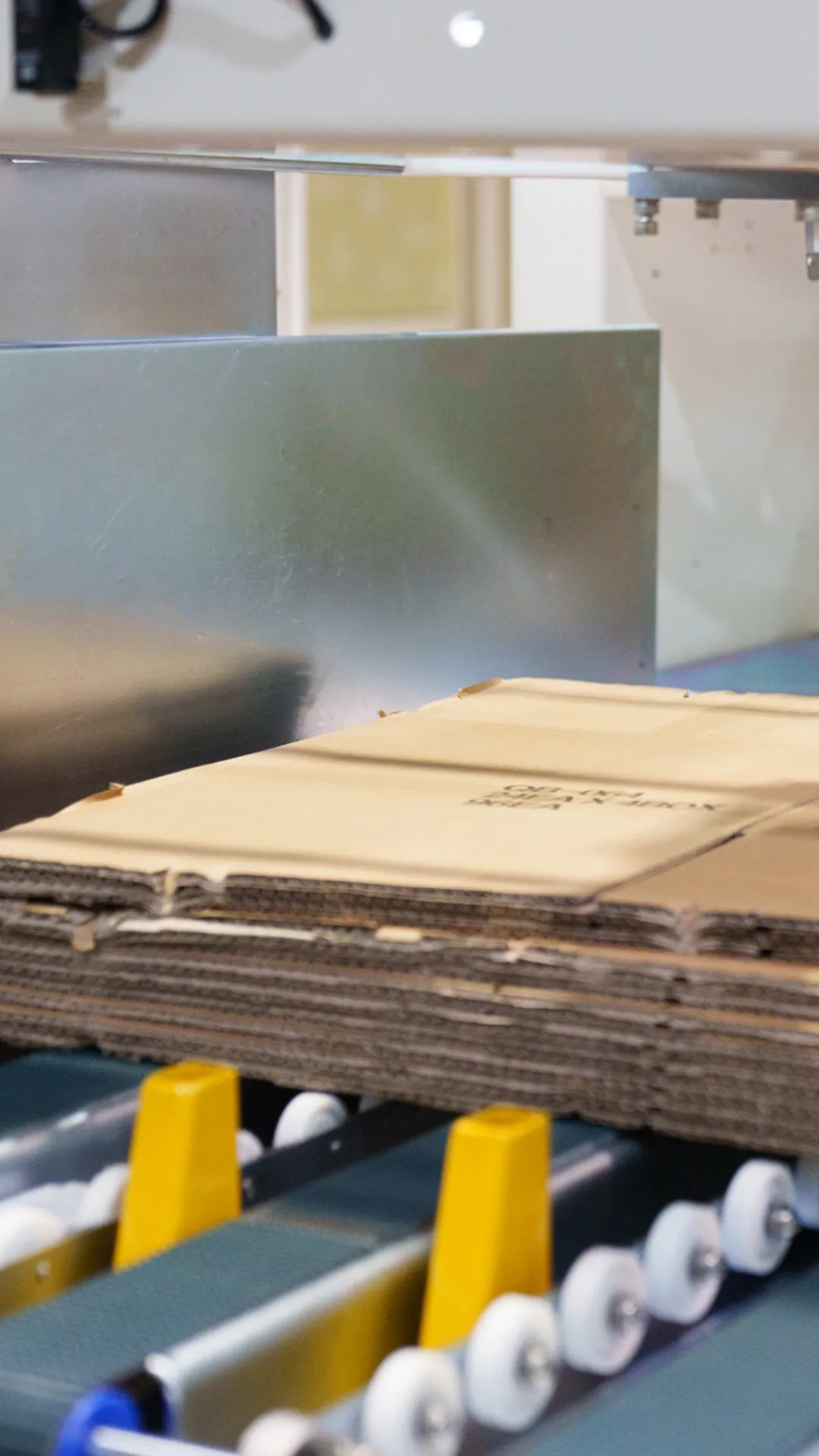
How You Operate the Equipment Is Part of Safe Practice
JS SYSTEM's AMB 1500 S/T inline automatic PP strapping machine sets itself up automatically when an operator selects a new size on the touch panel. This means operators make far fewer manual adjustments with their hands inside the machine. Its direct servo drive avoids the air leaks and cylinder wear that cause frequent minor faults in pneumatic machines, so it also needs less maintenance on the floor.
Even so, PPE is essential whatever equipment you use. A safe strapping operation needs both the right PPE and orderly work habits. For questions about installing and operating our equipment, visit jssys.work.