

Some scene illustrations in this article are AI-generated to aid understanding. The equipment photographs show actual JS SYSTEM machines.
Imagine a stack of corrugated boxes at the end of a conveyor, ready to be strapped into a shipping bundle. This comparison starts with the time required to strap one bundle. We examine how approximately 10 seconds for manual strapping and 2.1 seconds for automatic inline strapping apply when reviewing the shipping workflow.
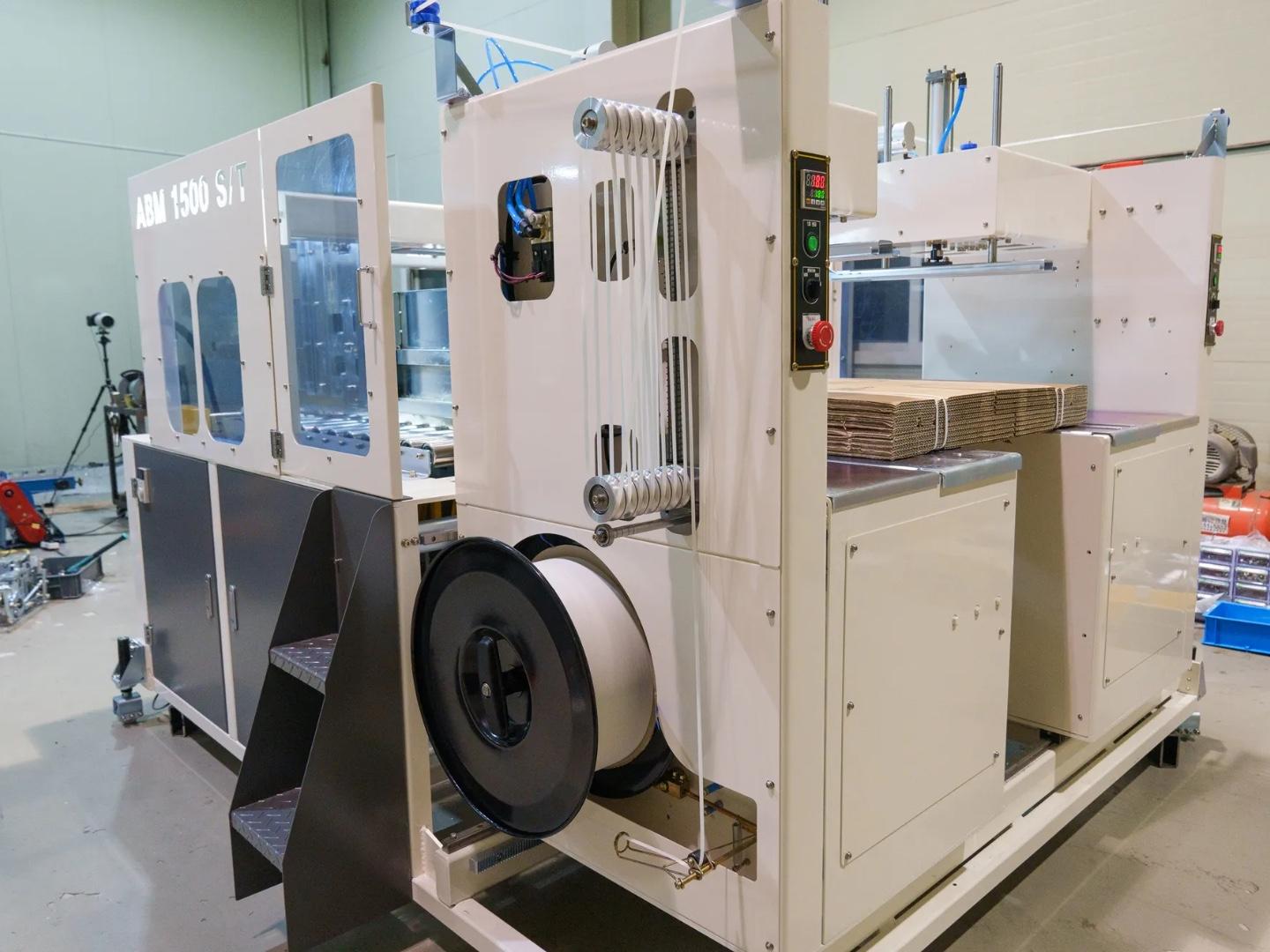
Designed and manufactured directly by JS SYSTEM, the AMB 1500 S/T straps bundles of finished corrugated boxes with PP straps. It is an automatic inline PP strapping machine for factories that manufacture and ship corrugated boxes.
The comparison covers the time for one strapping cycle, speed measured in bundles, connection to an existing conveyor, and conversion to box counts. After examining the difference in cycle time, we broaden the review to include the factory’s shipping units and line speed.
Comparing the Time for One Strapping Cycle
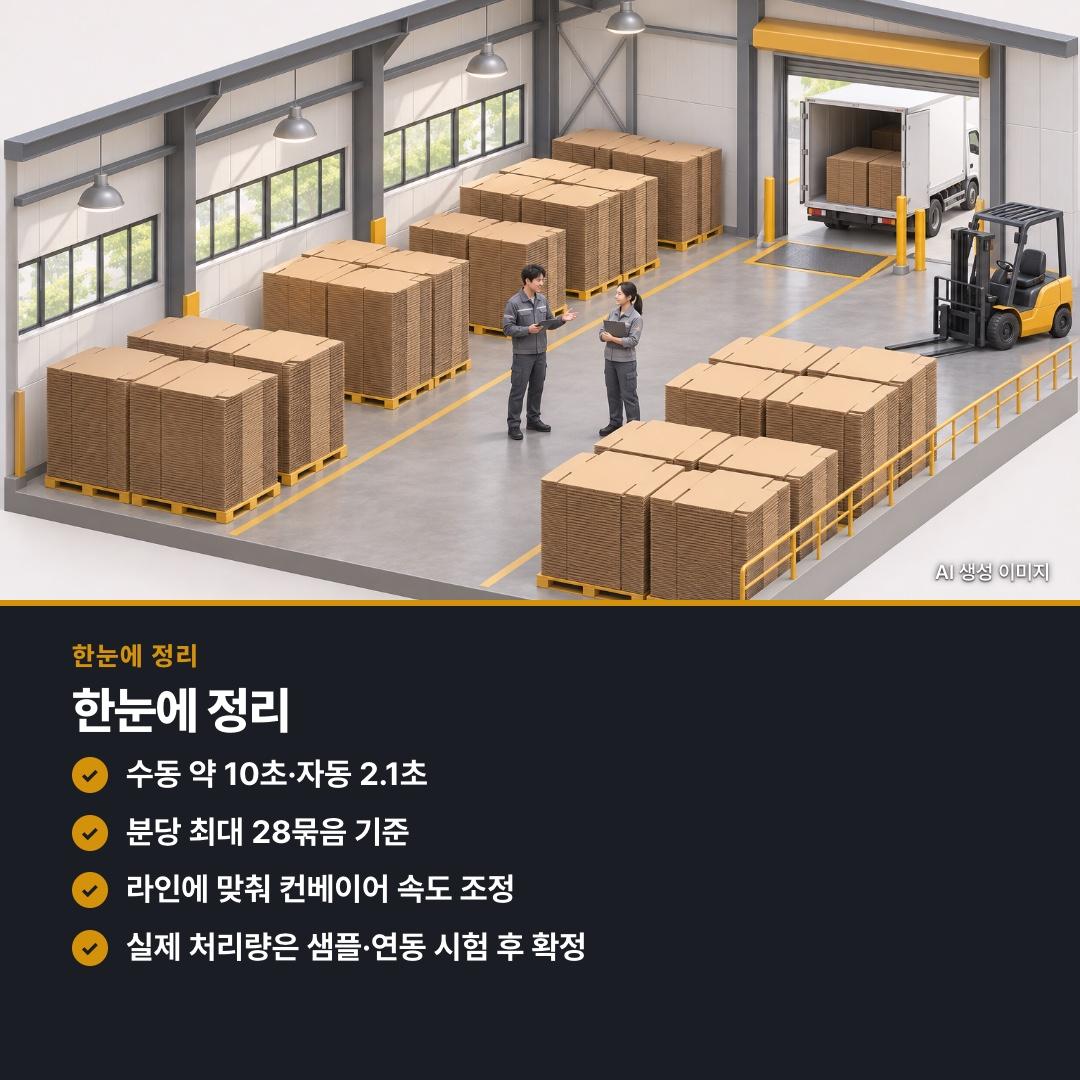
Manual strapping takes approximately 10 seconds per cycle, while the AMB 1500 S/T automatic inline machine takes 2.1 seconds. Both methods are compared on the same basis: one strapping cycle. The comparison excludes the time required to manufacture a single box or place products inside it.
The manual process is represented by a work cycle of approximately 10 seconds. The automatic inline process is represented by a machine cycle of 2.1 seconds. This comparison makes clear that the stage being considered for automation is the strapping of finished box bundles.
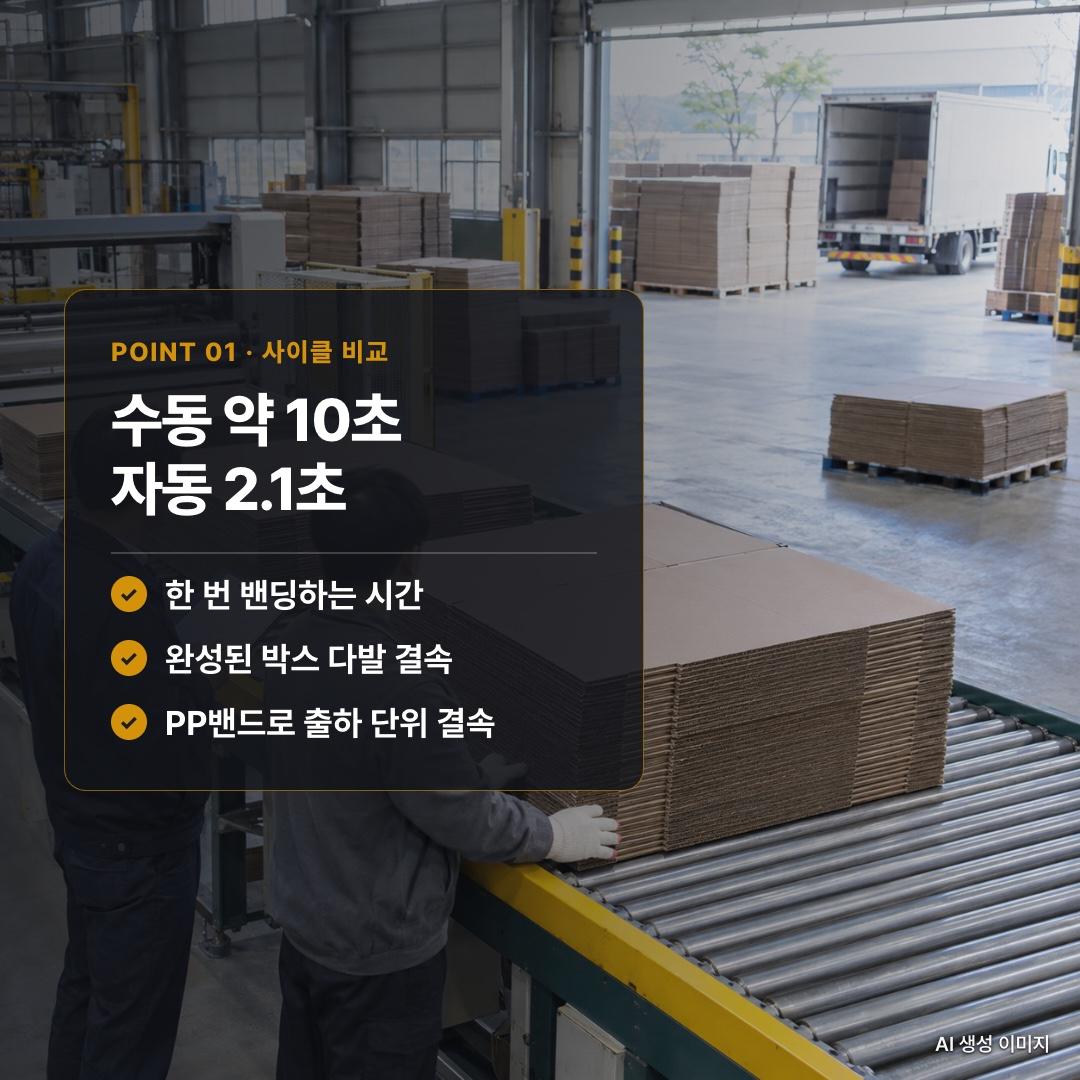
The 2.1-second figure provides a basis for reviewing the time allocated to strapping within the shipping workflow. When comparing equipment for a box manufacturing plant, this figure represents the strapping cycle time of the machine to be connected to the existing line.
Discussions among plant managers and production staff can move from a general statement of “faster” to a specific time benchmark. Compare the existing process and automatic inline strapping using the same criteria, and confirm the conditions for your factory during a quotation consultation.
Is the Per-Minute Rate Measured in Bundles?
After cycle time, the next comparison concerns the unit used to measure processing speed. The AMB 1500 S/T has a maximum strapping speed of 28 bundles per minute (28 cycles). This counts strapped bundles, rather than the individual boxes within each bundle.
Seconds are used to compare manual and automatic strapping times. Bundles per minute are used to assess the maximum rated output of automatic inline strapping. Keeping these measures separate allows strapping time and bundle processing speed to be assessed on their respective bases.
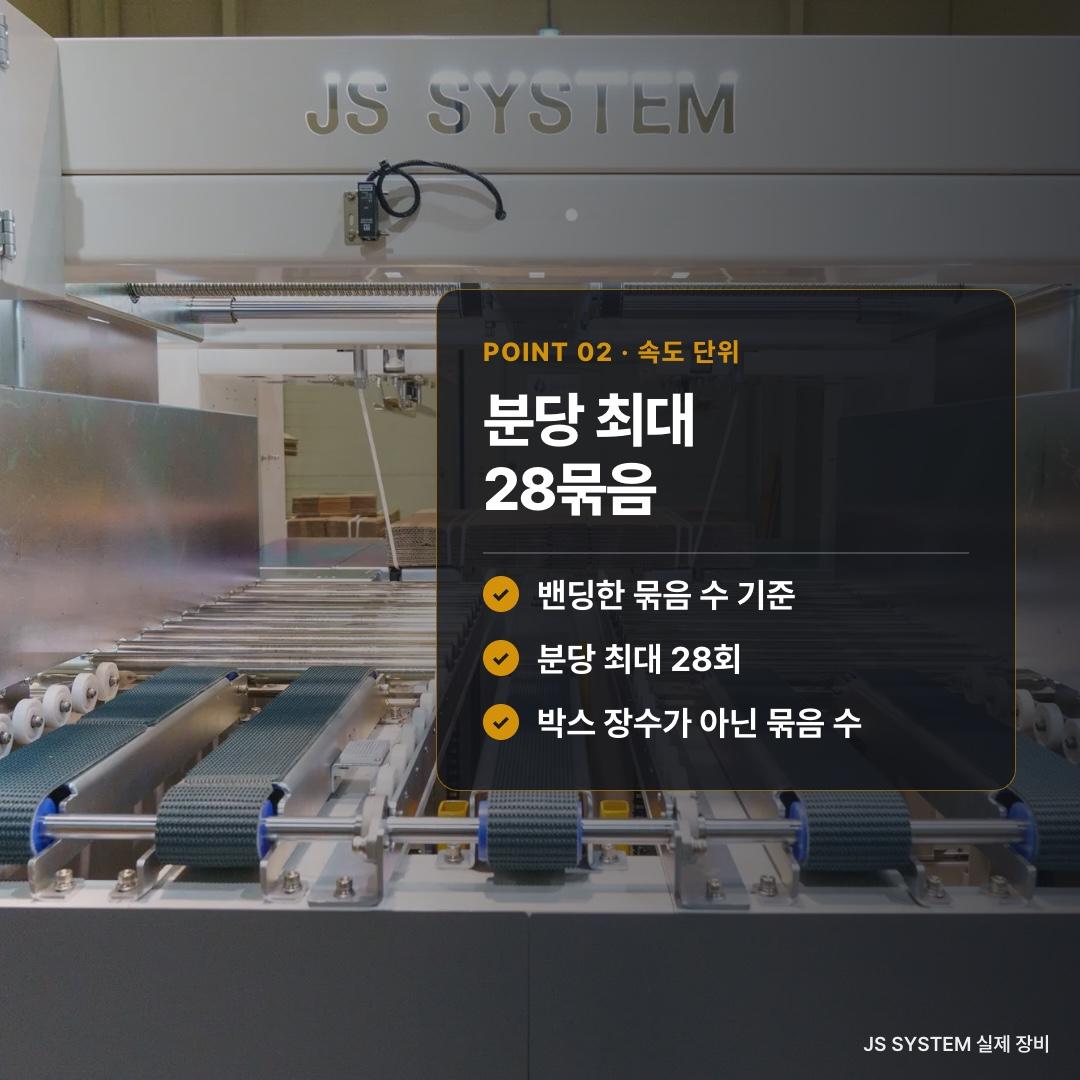
When discussing shipping output in terms of box counts, the number of boxes per bundle must also be considered. The maximum rate of 28 bundles per minute refers to strapped bundles, so conversion to box counts requires a specified number of boxes per bundle.
Can the Speed Be Matched to an Existing Line?
Reviewing the shipping workflow involves examining conveyor integration as well as strapping time. The AMB 1500 S/T connects inline to an existing conveyor line, integrating the machine that straps finished box bundles into the existing conveying route.
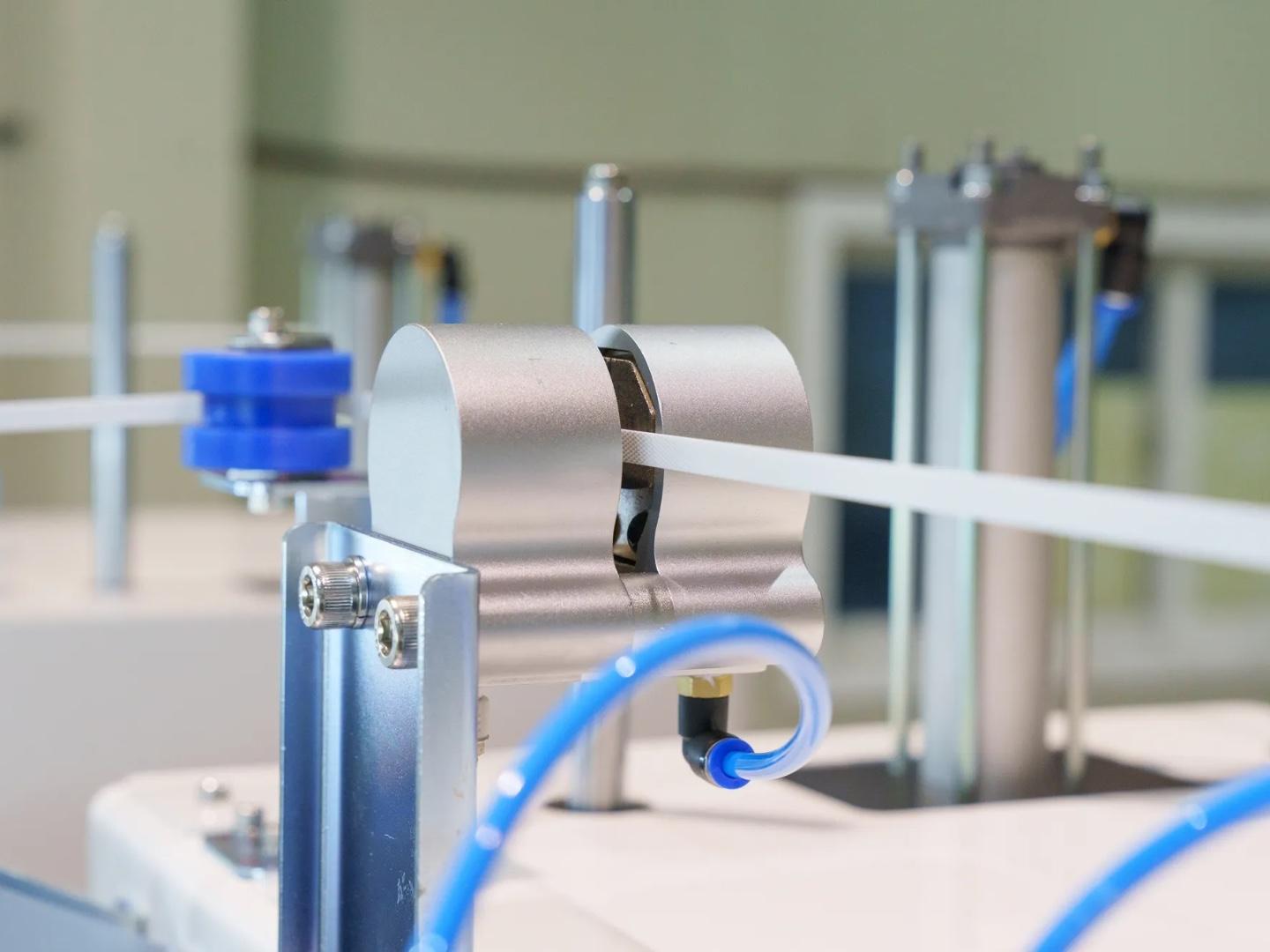
The conveyor speed can be adjusted independently to match the line speed. Box conveying and strapping speeds are also adjustable. A review of automatic inline strapping considers these speed adjustments alongside the 2.1-second cycle time.
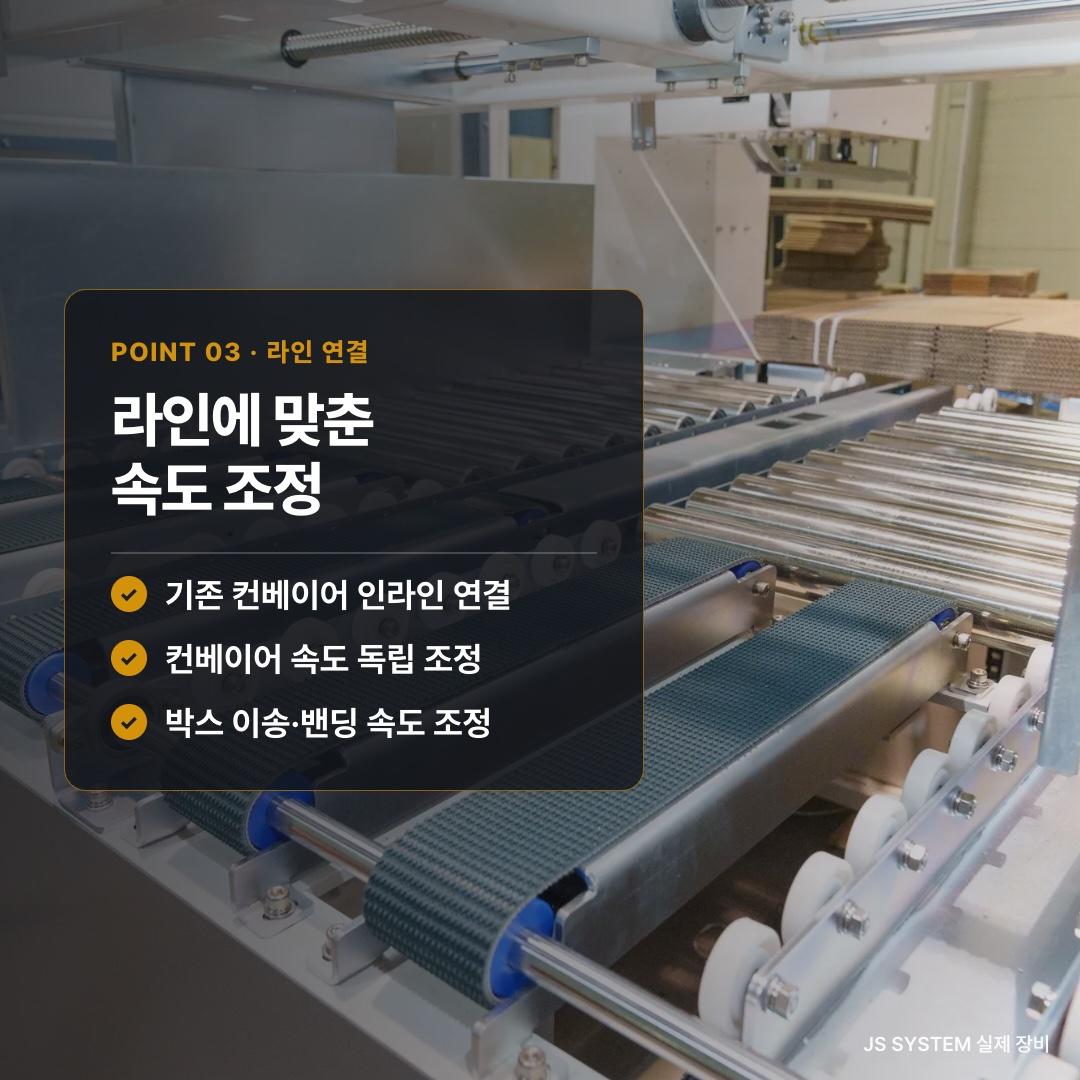
While the time comparison focuses on the strapping stage, the integration review addresses speed settings between the existing conveyor and the machine. Business owners and plant managers assess both the automatic inline cycle time and the adjustment functions that match the machine to the line.
For a quotation consultation, provide the line configuration, box sizes, and processing speed. These factory conditions are needed for an accurate quotation. The consultation also covers specific connection requirements for the shipping workflow.
Checking the Conversion to Boxes per Hour
At the maximum rated output of 28 bundles per minute, 15 boxes per bundle gives a calculated output of 420 boxes per minute. Maintaining this maximum rated output continuously for 60 minutes with 15-box bundles gives a calculated output of 25,200 boxes per hour. Including the number of boxes per bundle converts the strapping rate into a box count.
At the same maximum rated output, 10 boxes per bundle gives a calculated output of 16,800 boxes per hour. The condition that changes in this comparison is the number of boxes per bundle. The conversion should reflect the bundle configuration used at the box manufacturing plant.
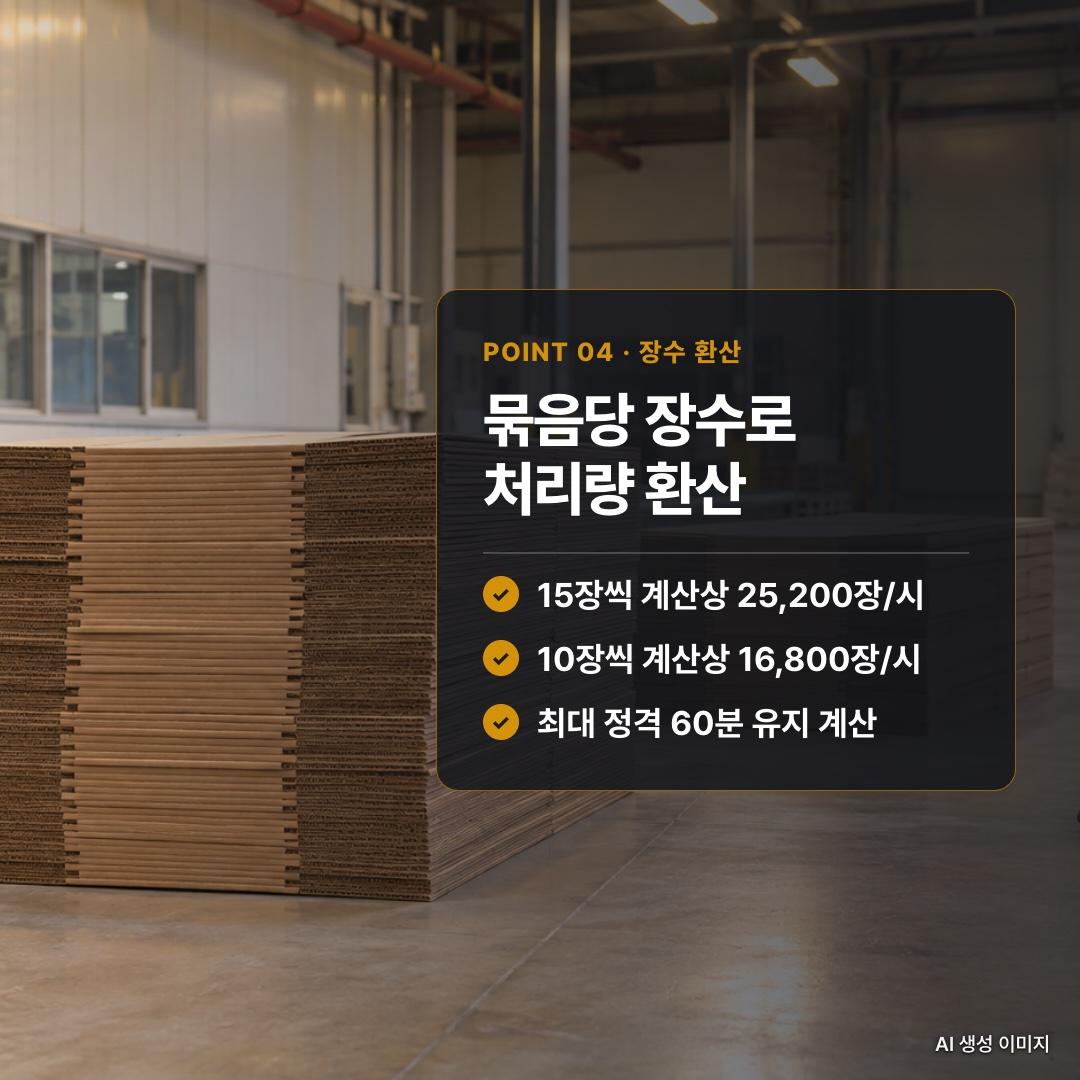
Both calculations assume that the maximum rated output is maintained continuously for 60 minutes. State this assumption when presenting hourly quantities. Actual throughput is confirmed after testing with box samples and testing integration with the line.
Materials used to discuss shipping quantities should distinguish the rated output in bundles from the converted box counts. Calculated hourly quantities should specify the number of boxes per bundle and the assumption of continuous operation at the stated rate, making the basis of each figure clear.
Frequently Asked Questions
Q. Is 2.1 seconds the time required to strap a single box?
It is the time for one strapping cycle on a bundle of finished corrugated boxes. The AMB 1500 S/T secures box bundles into shipping units; it is not a packaging machine that places products inside boxes.
Q. What measure is used to compare manual and automatic strapping times?
The comparison places approximately 10 seconds for manual strapping alongside 2.1 seconds for automatic inline strapping, using one strapping cycle as the common measure.
Q. Do the calculated hourly box counts determine actual throughput?
Actual throughput is confirmed after testing with box samples and testing integration with the line. The hourly conversions are presented as calculations that assume the maximum rated output of 28 bundles per minute is maintained continuously for 60 minutes.
This comparison focuses on the time required to strap bundles of finished corrugated boxes. When evaluating equipment purchases, compare cycle time, rated output in bundles, line speed adjustment, and the conditions for converting to box counts side by side to support your decision.
JS SYSTEM directly handles design, manufacturing, and after-sales service in Korea. Factory conditions are reviewed during the quotation consultation, and actual throughput is confirmed through testing with box samples and testing integration with the line.