
Why Energy Cost Has Become a Criterion for Choosing Equipment
Bundling stacks of corrugated boxes with PP band is a strapping process that repeats without pause on the shipping line. The longer the operating hours, the more the difference in power consumption of a single machine accumulates—feeding directly into the entire plant's operating costs.
JS SYSTEM's inline automatic PP banding machine, the AMB 1500 S/T, replaces the pneumatic drive method that had been standard for banding with full servo, so the same strapping job is handled with less power. In this article, we explain the structure from which these power savings arise.
The Key to Reducing Power Is Servo Direct Drive
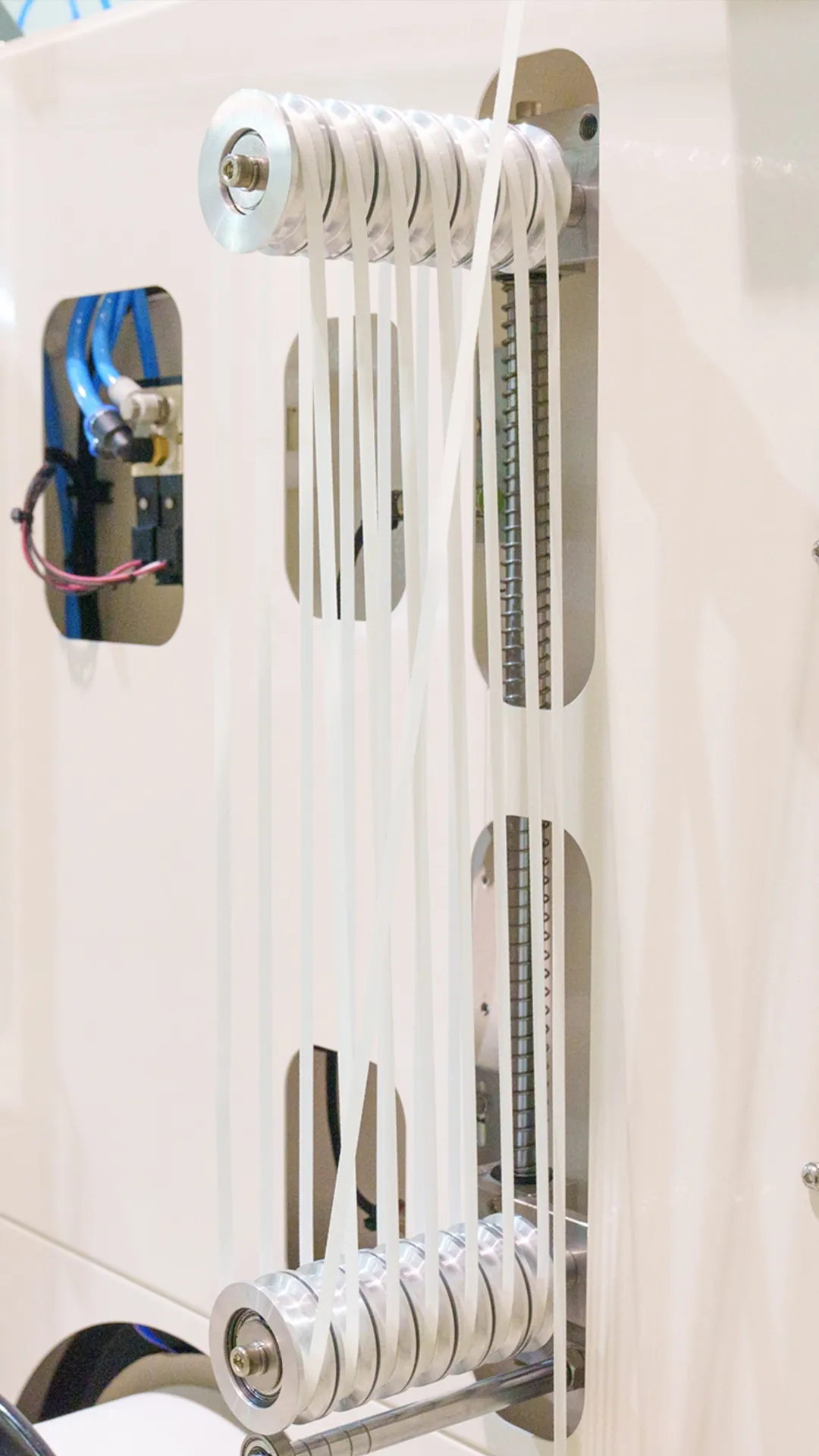
A pneumatic banding machine generates compressed air with a compressor and transmits motion through cylinders. This process requires compression and transfer losses as well as constant pressurization, resulting in low energy efficiency. Because the AMB 1500 S/T directly controls its drive unit with 9-axis full servo, it uses power precisely—only at the moment the motion requires it.
As a result, it performs the same strapping job with about 30–40% less power than the pneumatic method. While maintaining a high-speed rate of 28 cycles per minute, power consumption stays at around 4kW—a structure that secures both processing speed and energy efficiency at once.
Power Savings
Servo drive vs. pneumatic method
Pneumatic vs. Servo: What's the Difference?
The difference between the two methods goes beyond simple power figures. Because the drive principle itself differs, the energy-loss factors and maintenance conditions differ along with it. Below is a summary of the structural differences the two methods show in the strapping process.
| 항목 | Category | Pneumatic |
|---|---|---|
| Drive Method | Pneumatic cylinder | Servo direct |
| Power Efficiency | Baseline | About 30–40% savings |
| Air Leakage Loss | Yes | No |
| Constant Pressurization Required | Yes | No |
Drive Method
Category
Pneumatic cylinder
Pneumatic
Servo direct
Power Efficiency
Category
Baseline
Pneumatic
About 30–40% savings
Air Leakage Loss
Category
Yes
Pneumatic
No
Constant Pressurization Required
Category
Yes
Pneumatic
No
Why the Savings Last Over Time
Energy efficiency is only meaningful if it is maintained not just at the time of installation but over long-term operation. Pneumatic systems lose efficiency over time due to air leakage and cylinder wear, but servo direct drive has few consumable and wear parts—so it rarely breaks down and sustains its initial efficiency for a long time.
Extreme Durability = Lasting Savings
With no pneumatic parts to wear out, servo drive is strong in long-term, uninterrupted operation. Continuing to run without any drop in efficiency is itself the surest way to reduce cumulative energy costs.
Power Consumption
At high-speed operation
Full Servo Control
Precise direct drive
Per Minute
Savings while maintaining speed
A Summary for Facility Managers
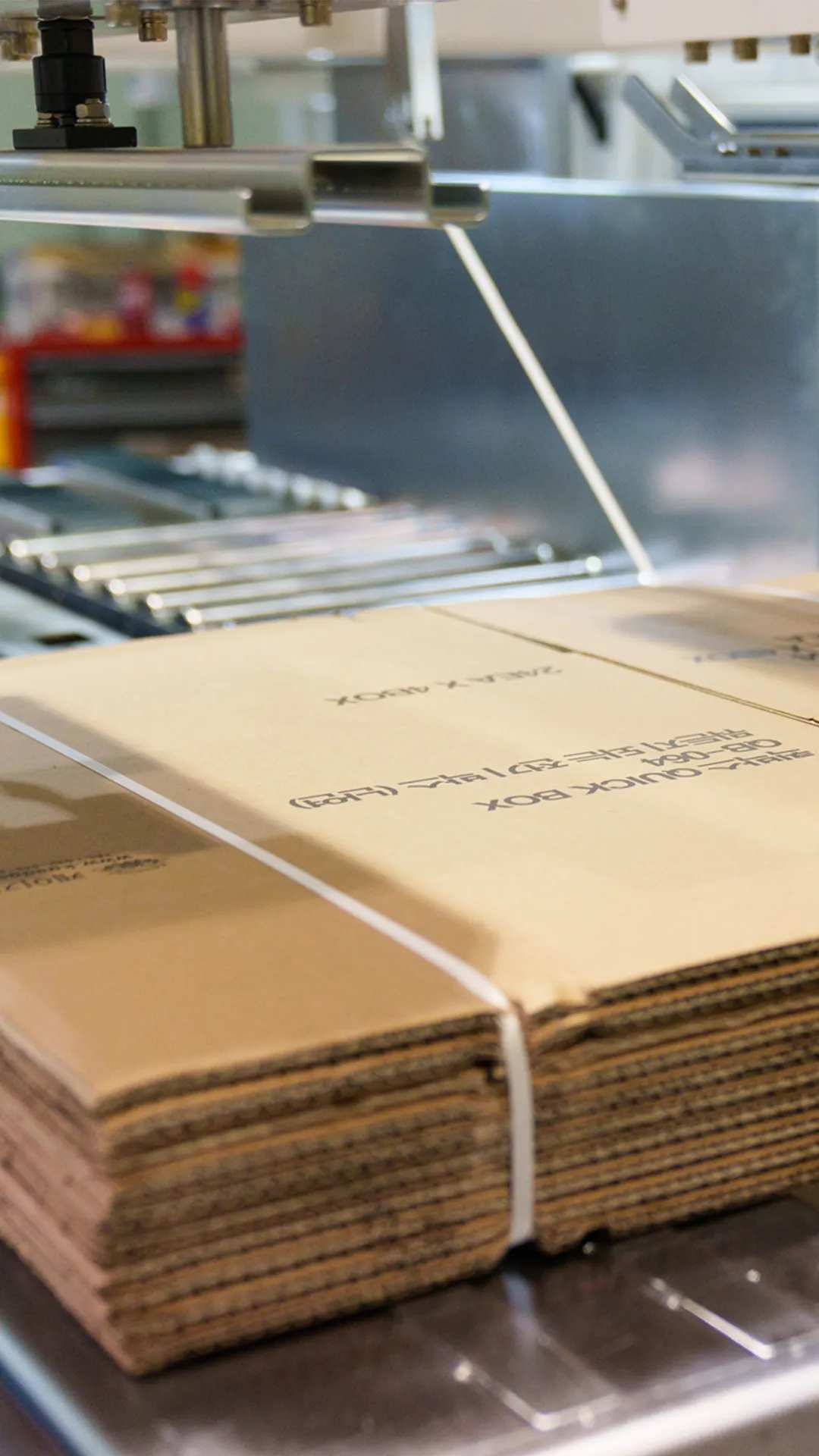
The power savings of the inline automatic PP banding machine AMB 1500 S/T are not an option but an effect that arises from its fundamental architecture of servo direct drive. It processes 28 cycles per minute with about 30–40% less power than pneumatic systems, and because it has few wear parts, this efficiency lasts a long time.
About 30–40% power savings vs. pneumatic
28 high-speed cycles per minute at roughly 4kW power consumption
Servo direct drive with no air leakage or cylinder wear
Minimal efficiency loss, so savings continue even in long-term operation