
The Labor Shortage at Box Manufacturing Sites and the Strapping Process
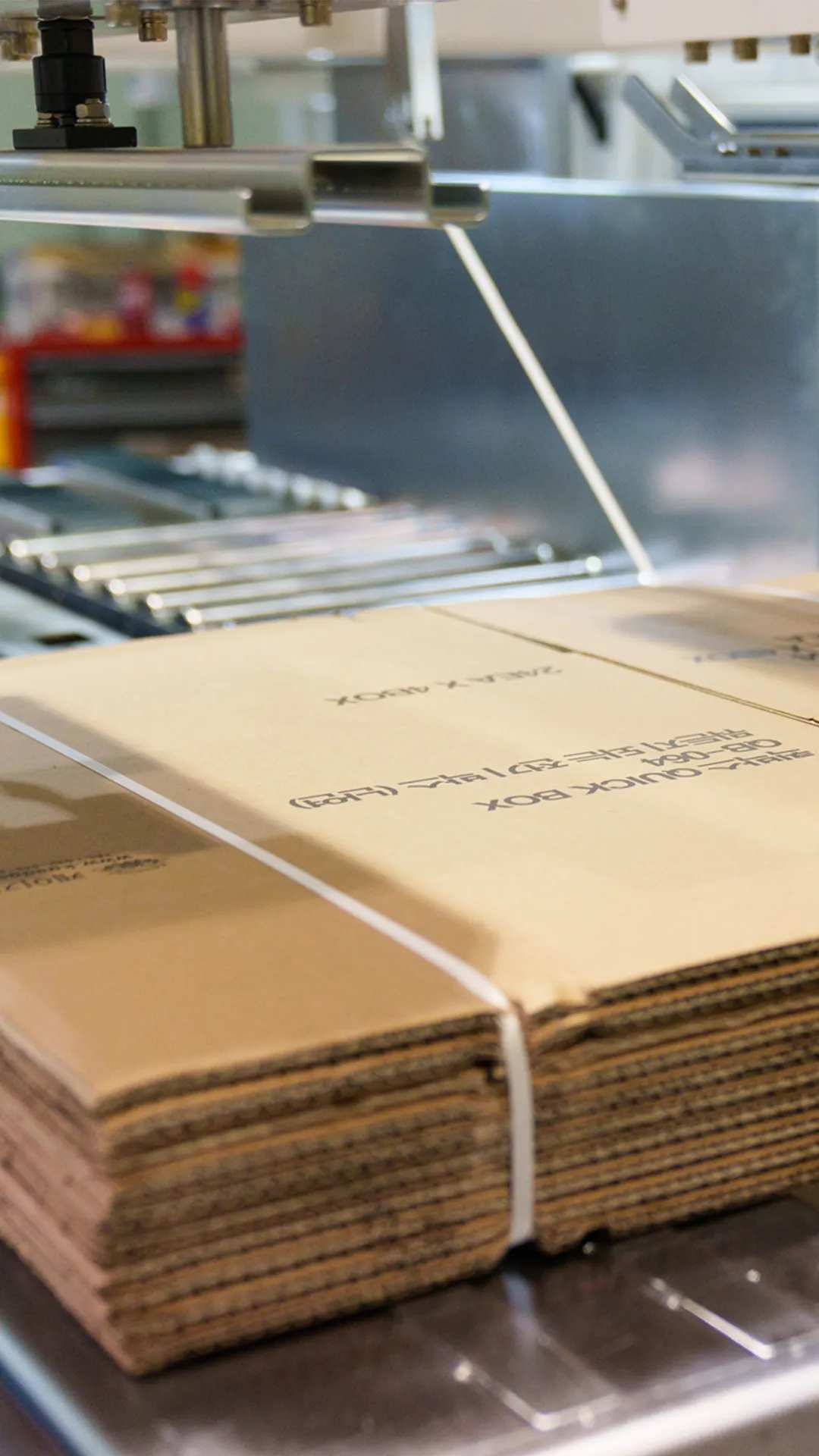
At manufacturing sites that produce and ship corrugated boxes, one of the hardest positions to staff is the bundle-strapping process right before shipping. Gathering finished boxes into set quantities and strapping them with PP band is a simple, repetitive task that is physically demanding and must be performed standing all day to keep pace with the line speed, so new workers are hard to attract and turnover is frequent.
The problem is that strapping sits at the very end of the line—the final gate that determines shipment. No matter how fast the upstream processes run, if there aren't enough people to do the strapping, boxes pile up and shipping is delayed. For this reason, box plants are showing a clear trend toward taking the strapping process out of human hands and automating it.
Why Manual Strapping Is Vulnerable to Labor Shortages
Manual strapping results depend on the operator's skill and condition. Because the band placement and pulling force vary from person to person, the strapping tension is inconsistent, and any staffing gap immediately disrupts the shipping speed of the entire line. The deeper the labor shortage, the greater the risk this variability poses.
| 항목 | Category | Manual Strapping |
|---|---|---|
| Labor Dependence | High | Low |
| Strapping Tension Uniformity | Varies by operator | Uniform via servo control |
| Impact of Staffing Gaps on Shipping | Line congestion | Unmanned continuous operation |
| Speed Consistency | Depends on condition | Constant |
Labor Dependence
Category
High
Manual Strapping
Low
Strapping Tension Uniformity
Category
Varies by operator
Manual Strapping
Uniform via servo control
Impact of Staffing Gaps on Shipping
Category
Line congestion
Manual Strapping
Unmanned continuous operation
Speed Consistency
Category
Depends on condition
Manual Strapping
Constant
The Core of Strapping Automation: The Inline Automatic PP Strapping Machine
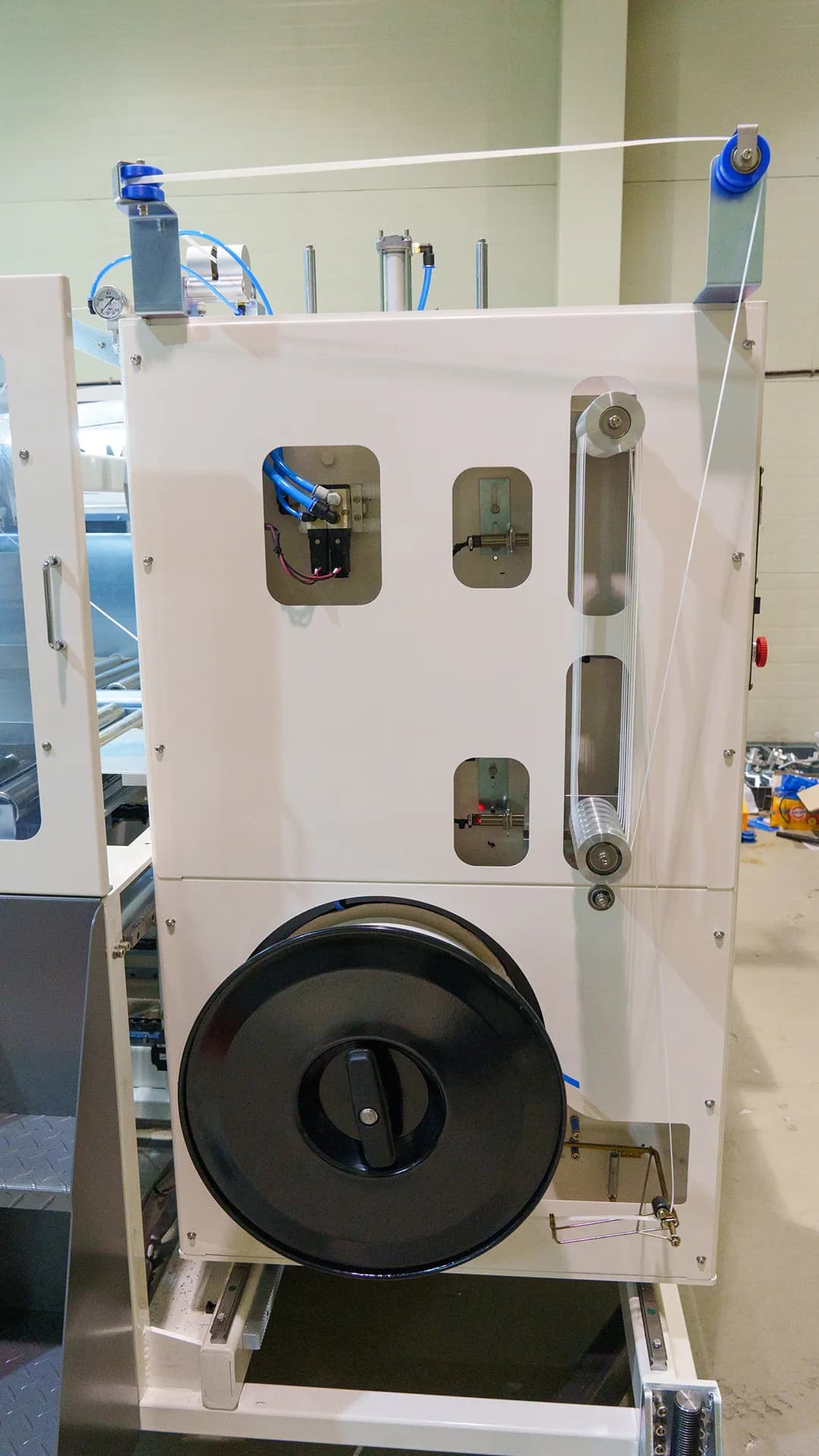
The inline automatic PP strapping machine (AMB 1500 S/T) connects directly to your existing production line and straps box bundles with PP band and sends them out without any human involvement. Its full-servo 9-axis auto-setting structure enables high-speed strapping of 28 cycles per minute, and servo-controlled tension keeps bundle quality consistent where it once varied from person to person. The side-feed (S) connects directly to an existing inline setup, while the top-feed (T) can be operated as a standalone unit.
Strapping per minute
Unmanned continuous processing with full-servo high-speed drive
Moving the Final Process from People to the Line
Automating the strapping process that determines shipment lets you break free from a structure where a staffing gap or hiring delay translated directly into shipping disruptions.
Auto-Setting That Reduces Reliance on Skilled Workers
Another burden during a labor shortage is having to reconfigure the equipment every time the box specification changes. With the inline automatic PP strapping machine, when the specification changes you simply select the relevant setting on the touch panel and it sets up automatically, cutting 10–30 minutes of preparation time compared to manual adjustment. Since skilled workers no longer need to make every adjustment by hand, dependence on specific personnel is reduced.
In addition, because it uses servo direct drive, there is no air leakage or cylinder wear common in pneumatic systems, so minor breakdowns are rare. As a piece of equipment that takes over strapping in place of people, the ability to run reliably for long periods without interruption is an especially valuable asset at sites facing labor shortages.
In an Era of Labor Shortages, the Breathing Room Created by Strapping Automation
Strapping automation is not simply about reducing one pair of hands; it is about building a structure where shipping does not stop even when people are absent. Relieving workers of repetitive, high-intensity tasks creates the room to reassign personnel to positions where people are truly needed, such as inspection and management.
Unmanning the final shipping process to minimize shipping disruptions caused by staffing gaps
Servo tension control ensures uniform strapping quality with no variation between operators
Touch-panel auto-setting cuts specification-change preparation time by 10–30 minutes
Servo drive with few minor breakdowns enables long-term uninterrupted operation