
Banding machine safety starts with pre-operation inspection
The automatic banding process that straps bundles of corrugated boxes with PP band repeats at a rapid 28 cycles per minute. At that pace, a small lapse in the work area can lead to a serious accident. Most on-site accidents stem not from equipment defects but from inspection lapses just before startup.
The starting point of safe operation is not an elaborate manual, but the habit of a one-minute daily check before pressing the start button each day. Here are five basic checklist items that equipment and purchasing managers should instill in operators.
per minute
A high-speed, repetitive process — why pre-operation checks matter
5 pre-operation safety checks
Before operating the inline automatic PP banding machine (AMB 1500 S/T), here are five items for the operator to confirm in order. Checking them in the same order every time reduces omissions and builds the habit.
Check the remaining PP band and its loading — verify the band is set on its correct path.
Check the location and operation of the emergency stop button — confirm it works properly and is within immediate reach.
Remove foreign objects and debris from the work area — make sure band-cutting scraps or fallen objects are clear of the moving parts.
Verify the size setting — check on the touch panel that the settings match the box bundle dimensions.
Keep body, gloves, and sleeves clear of moving parts — tidy anything that could get caught in rotating or strapping components.
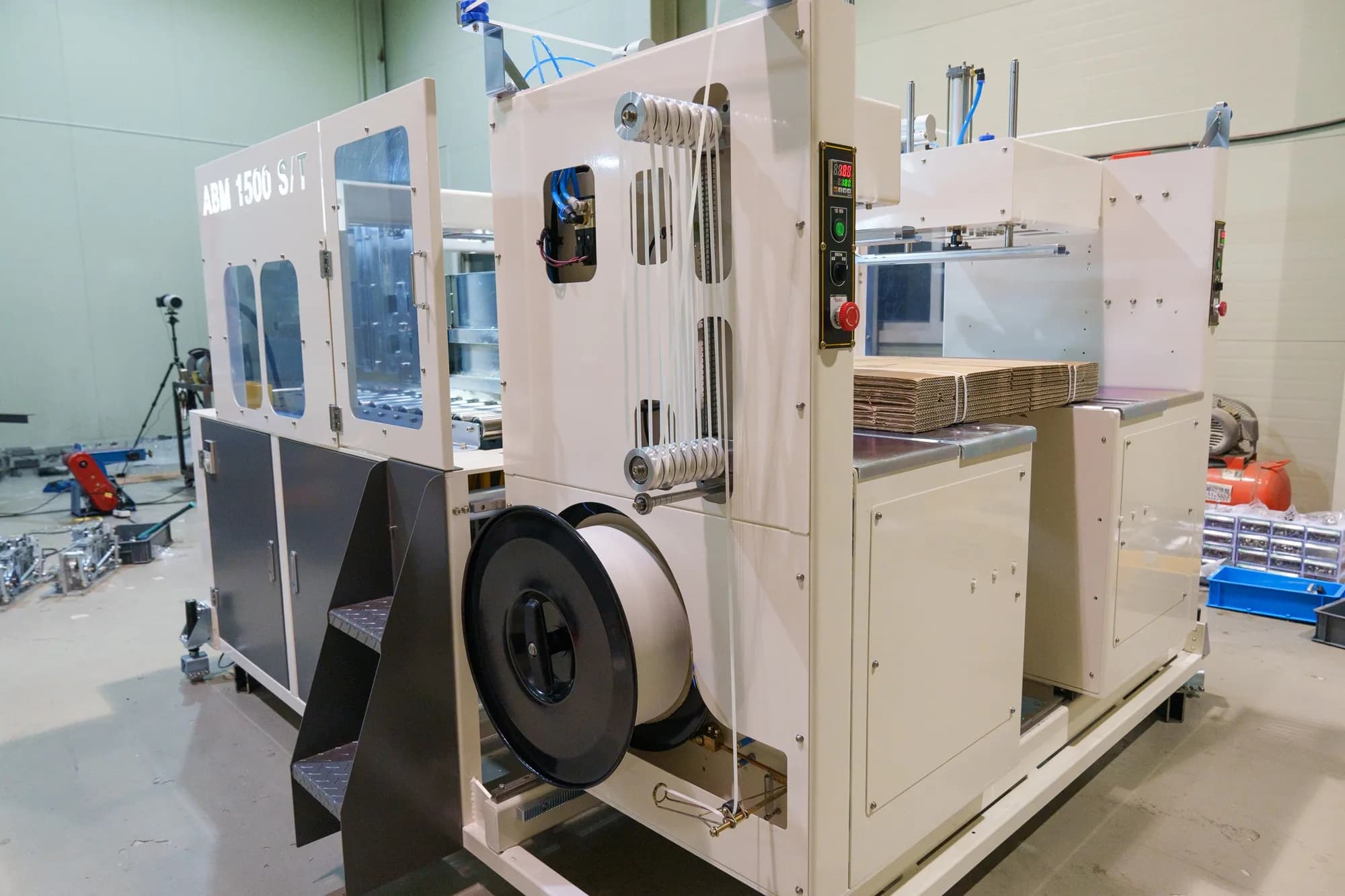
Check the emergency stop and moving-part access first
In a high-speed strapping process, the most important safety device is the emergency stop (E-Stop). Before operation, you must confirm every time that the button is within reach and works properly. Also check your work posture so that hands, gloves, or loose sleeves do not get near the moving parts where strapping takes place.
No hands during operation
Never put your hands into the motion zone where the band wraps and straps the box bundle while it is running. If you need to align boxes or remove debris, always stop the machine first.
Size-setting errors are part of the safety check, too
A setting that does not match the box dimensions can cause abnormal operation such as band jams or a loose bundle, which can lead to safety hazards. With the AMB 1500, when you select the setting on the touch panel for a size change, the 9-axis full servo automatically adjusts the setup, saving 10–30 minutes compared to manual adjustment while reducing human error.
| 항목 | Manual setting | Automatic (full servo) |
|---|---|---|
| Size change | Manual operator adjustment | Automatic touch-panel setup |
| Setup time | Relatively time-consuming | Saves 10–30 minutes |
| Tension control | Deviation possible | Uniform via servo tension control |
Size change
Manual setting
Manual operator adjustment
Automatic (full servo)
Automatic touch-panel setup
Setup time
Manual setting
Relatively time-consuming
Automatic (full servo)
Saves 10–30 minutes
Tension control
Manual setting
Deviation possible
Automatic (full servo)
Uniform via servo tension control
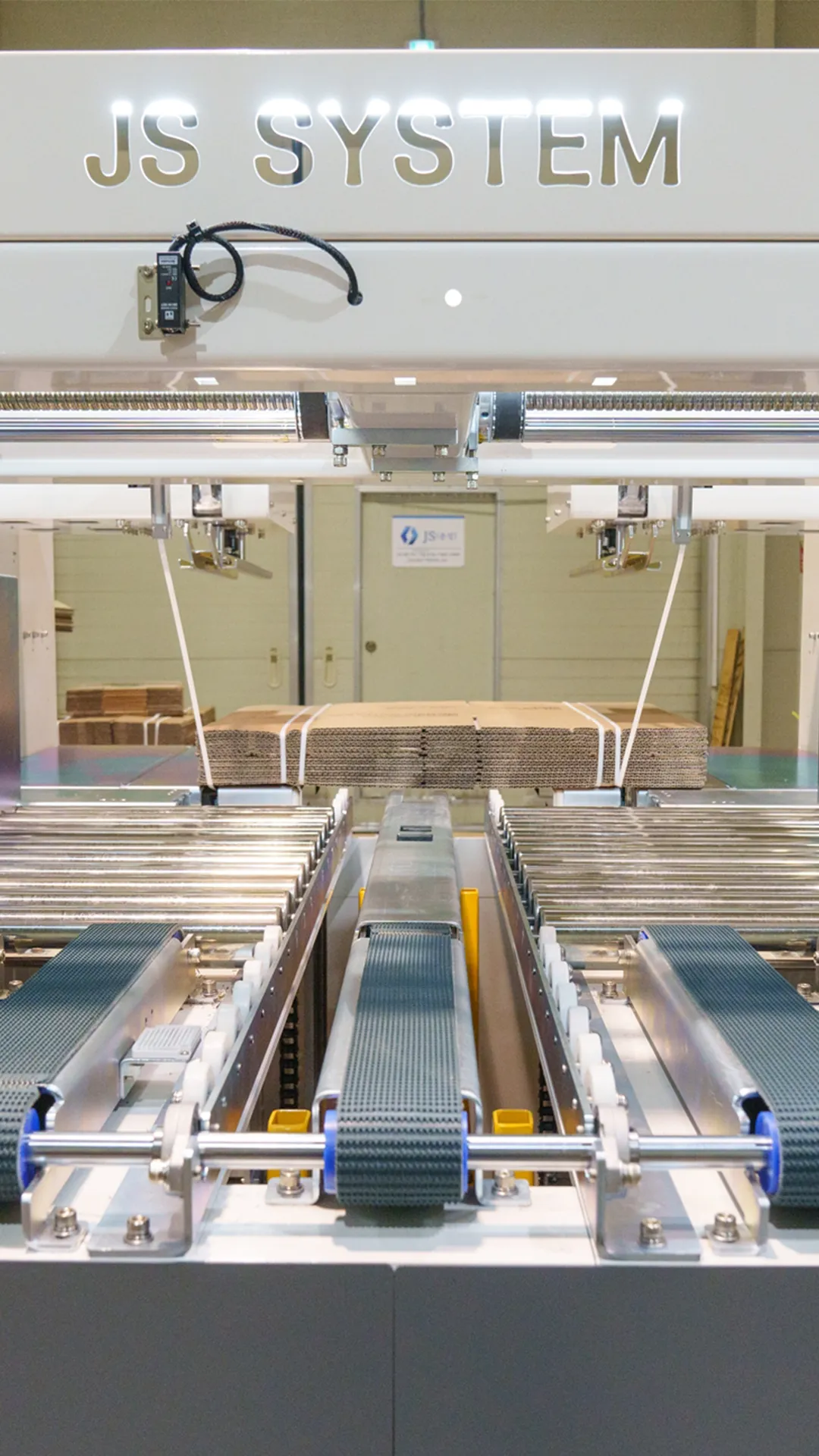
A habit of inspection is the foundation of stable operation
The AMB 1500 uses a servo direct-drive design with no air leaks or cylinder wear as in pneumatic systems, minimizing wear and consumable parts so that minor breakdowns are rare. Even so, this durability is sustained reliably only when supported by basic daily inspection. The 5 pre-operation checks protect safety and, at the same time, are the surest habit for keeping the equipment running stably for the long term.
The maker takes responsibility to the end
If you find any abnormality during inspection, please have it verified through direct after-sales service from the manufacturer's engineers rather than forcing operation. The designer and manufacturer respond directly.