
The Packaging Automation Trend and the Reality for Small and Mid-Sized Manufacturers
Packaging automation is no longer a challenge reserved for large corporations. As labor becomes harder to secure and demands for consistent quality grow, small and mid-sized manufacturers handling corrugated boxes are increasingly looking into automation as well.
That said, small factories find it difficult to make an entire line unmanned all at once. Investment capacity and floor space are limited, and existing operations cannot simply be halted. So rather than changing every process simultaneously, a more realistic strategy is to automate in stages, beginning with the processes that deliver clear benefits.
Core Principle
Automation is not 'all or nothing.' By starting with a process that has a clear bottleneck and is easy to standardize, you can feel the impact even with a small investment.
Stage 1: Automate Banding First — the Bottleneck Process
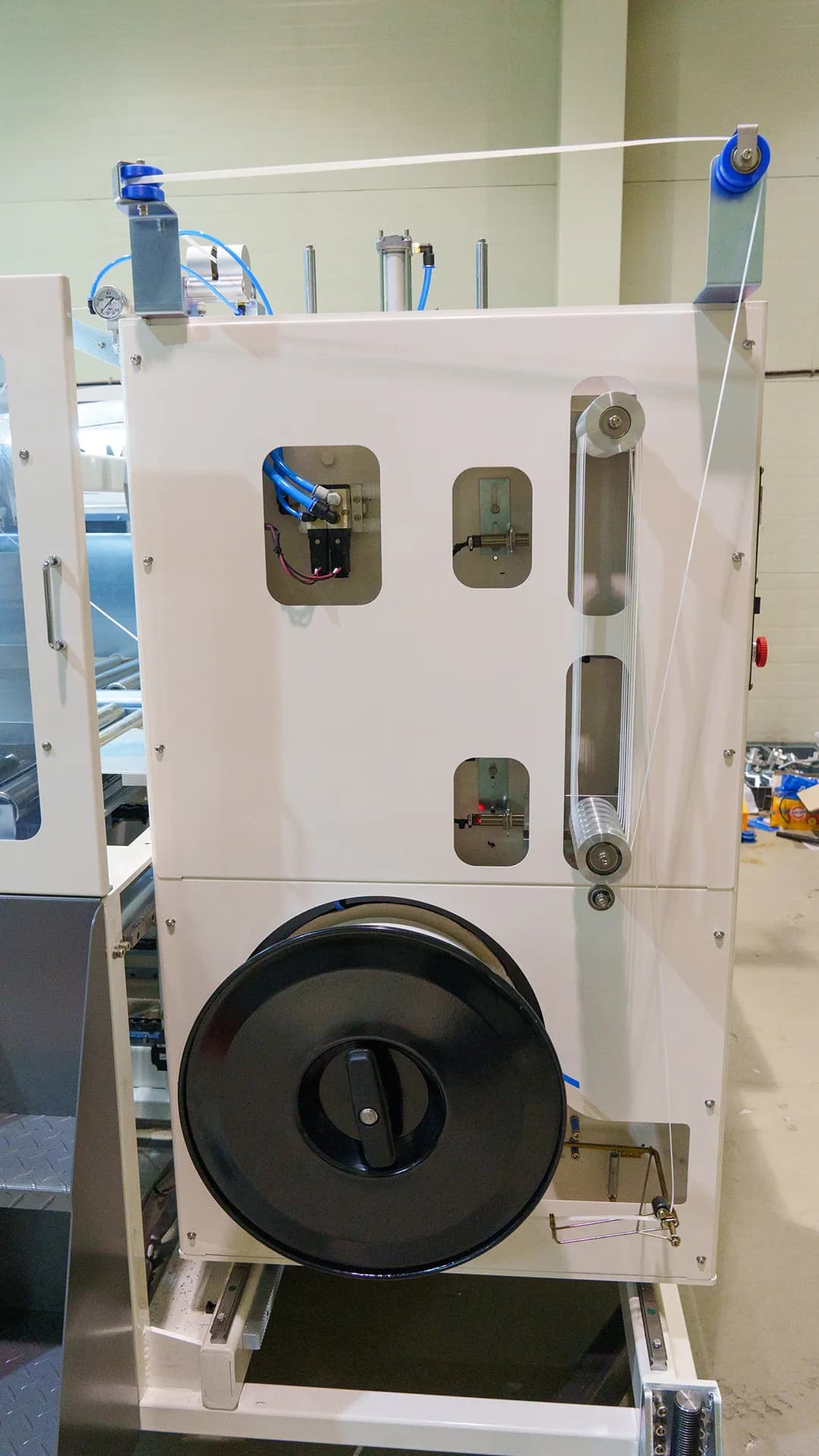
On a packaging line, the banding process of strapping boxes with PP band is highly repetitive and easy to standardize, making it an ideal first step for staged automation. An automatic banding machine can stabilize the tension variation and speed limitations that occur when people strap boxes by hand.
The AMB 1500 is an automatic inline banding machine designed specifically for corrugated boxes, using servo-controlled tension to keep strapping strength uniform. With high-speed operation of 28 cycles per minute, it relieves the bottleneck that once depended on manual labor, while being deployable without major changes to the existing line layout.
Per Minute
High-speed banding
Full-Servo Control
Auto-setting
Servo Tension Control
Consistent strapping strength
Stage 2: Choose the Line Connection Method to Suit Your Factory
As you gradually expand automation, how you position the equipment matters. If you have an existing conveyor line, connecting inline to keep the flow uninterrupted works well; if your lines are separated or space is limited, a standalone layout is the better fit.
The AMB 1500 comes in S and T models depending on the feed method. The S model uses side feeding, ideal for inline connection to an existing line, while the T model uses top feeding, suited to standalone placement. Being able to slot it in stage by stage without changing your factory's current workflow reduces the burden of adoption at a small and mid-sized scale.
| 항목 | Category | S Model (Side Feed) |
|---|---|---|
| Feed Method | Side feed | Top feed |
| Layout | Inline connection to existing line | Standalone placement |
| Suitable Situation | Continuous line | Space-separated line |
Feed Method
Category
Side feed
S Model (Side Feed)
Top feed
Layout
Category
Inline connection to existing line
S Model (Side Feed)
Standalone placement
Suitable Situation
Category
Continuous line
S Model (Side Feed)
Space-separated line
Stage 3: Handle Multiple Product Types and Secure Operational Efficiency
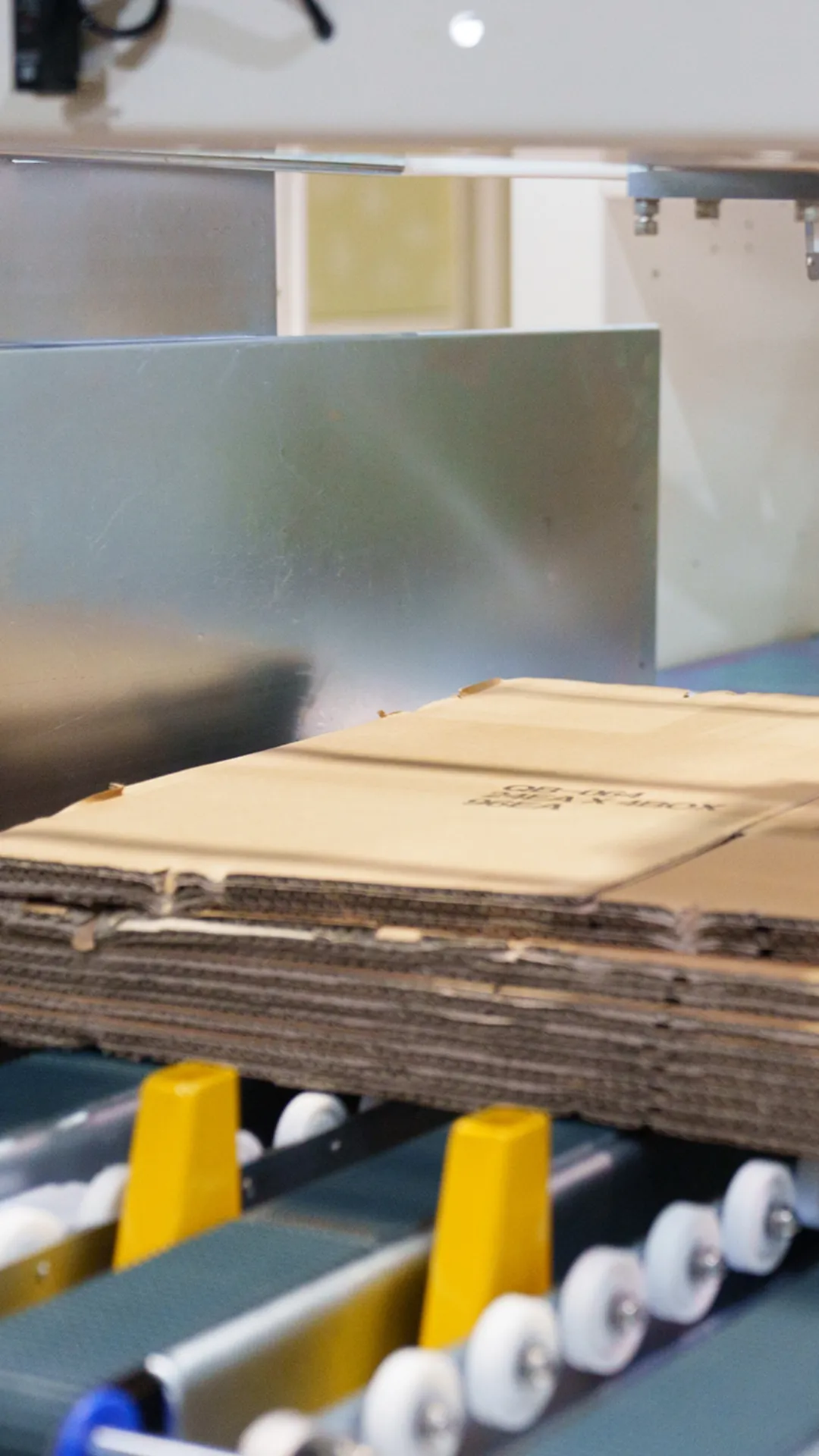
Small and mid-sized manufacturers rarely deal with just one specification. In an environment where box sizes change frequently, the time spent manually readjusting equipment each time translates directly into losses. The next stage of automation is to handle these specification changeovers quickly.
The AMB 1500 applies full-servo 9-axis auto-setting, so when a specification changes, it sets itself automatically with just a selection on the touch panel. Compared to manual setup, it saves 10–30 minutes per changeover, minimizing downtime even in low-volume, high-mix production. This is the first specification in Korea to apply full-servo automatic-control auto-setting technology.
Shorter Specification Changeover Time
Automatic setup with just a touch-panel selection — saving 10–30 minutes per changeover versus manual. The more varied the product mix, the greater the cumulative benefit.
The Operational Benefits of Staged Automation
By expanding automation in stages — starting with banding, then line connection, then specification changeover — you spread out the investment burden while confirming the benefits at each step. In particular, the difference in drive method directly affects long-term operating costs.
The AMB 1500 adopts servo drive, cutting power consumption by 30–40% compared to pneumatic systems. With no air leaks or cylinder wear, it has fewer minor breakdowns, reducing the time and cost spent on maintenance. Even after installation, the manufacturer's engineers provide on-site after-sales service directly, so even small and mid-sized factories short on in-house maintenance staff can operate reliably.
Qualitative Benefits of Servo Drive
The people who built it stand behind it to the end.